⭐⭐⭐⭐⭐930+ Happy Customer Reviews

irrigation-system-components

Irrigation System Components Explained (2026 Guide)

short design image

Your sprinkler system looks simple from the lawn — heads pop up, water comes out. But underground and behind the scenes, ten distinct components work together to make that happen. When something goes wrong, knowing which part does what is the difference between a $20 DIY fix and a $200 guess. Here’s every irrigation system component, what it does, and which ones fail most often in Florida.

How Water Travels Through Your Irrigation System

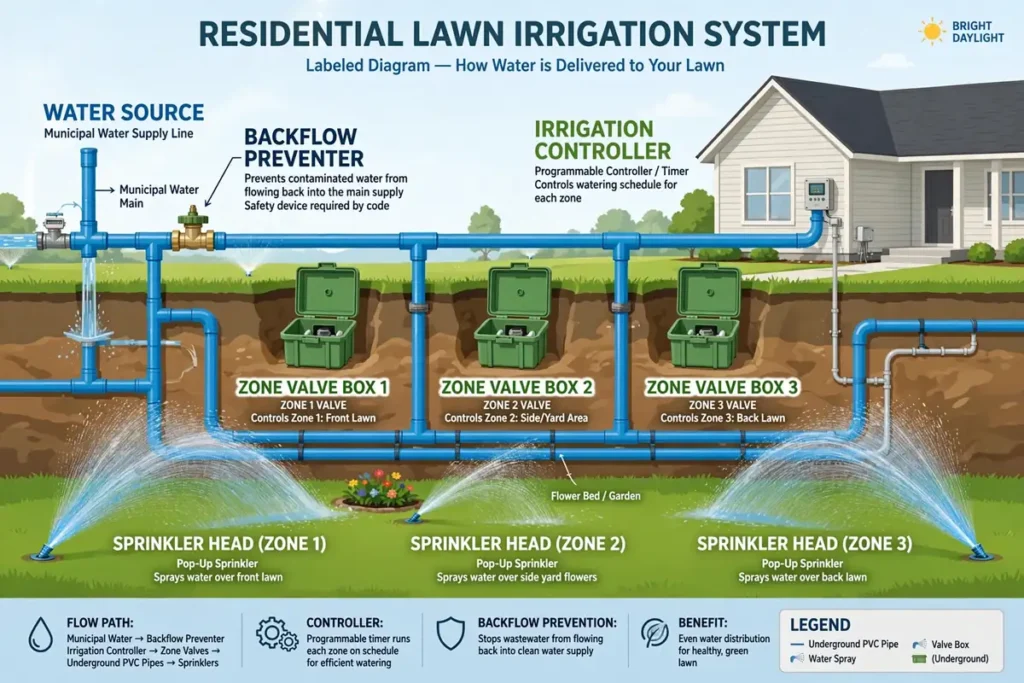
Before the parts, the path — because every component exists to serve one journey. Water enters from your source (city line, well, or reclaimed supply), passes through a backflow preventer that keeps it from contaminating your drinking water, then reaches the valves. Your controller opens one zone valve at a time on schedule.


Pressurized water flows through underground pipes to the sprinkler heads, which distribute it across that zone. Then the valve closes and the next zone runs.

That sequence — source → protection → control → distribution → delivery — is the logic behind every component below. When your system misbehaves, tracing this path is how you find the culprit.

The 10 Irrigation System Components

These ten parts make up virtually every residential irrigation system in Florida. They’re grouped by function, from water entry to the spray hitting your grass.

1 & 2. Water Source + Backflow Preventer

Water source is where it all starts: a municipal water line, a private well, or reclaimed water (common in Palm Coast subdivisions). The source determines your pressure, your water quality, and which other components you need — well systems need pumps and filters; reclaimed systems need specific backflow hardware.


The backflow preventer sits right where irrigation meets your potable water line. It’s a one-way valve assembly that stops fertilizers, pesticides, and soil from flowing backward into your drinking water. In Florida this isn’t optional — it’s required by plumbing code, and most counties require annual testing. It’s also the part most likely to crack in a freeze, since it sits above ground.

3 & 4. Controller + Zone Valves

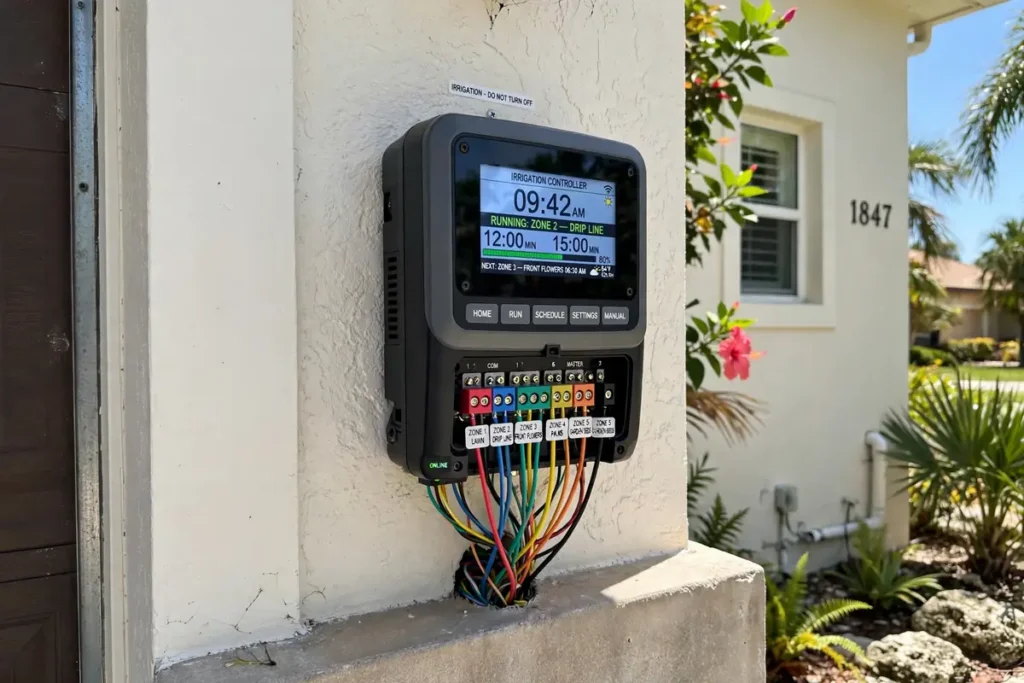
The controller (timer) is the brain: it tells each zone when to run and for how long. Modern smart controllers adjust for rain and season; basic ones just follow the schedule you set. When a zone won’t turn on — or won’t turn off — the controller is the first suspect.


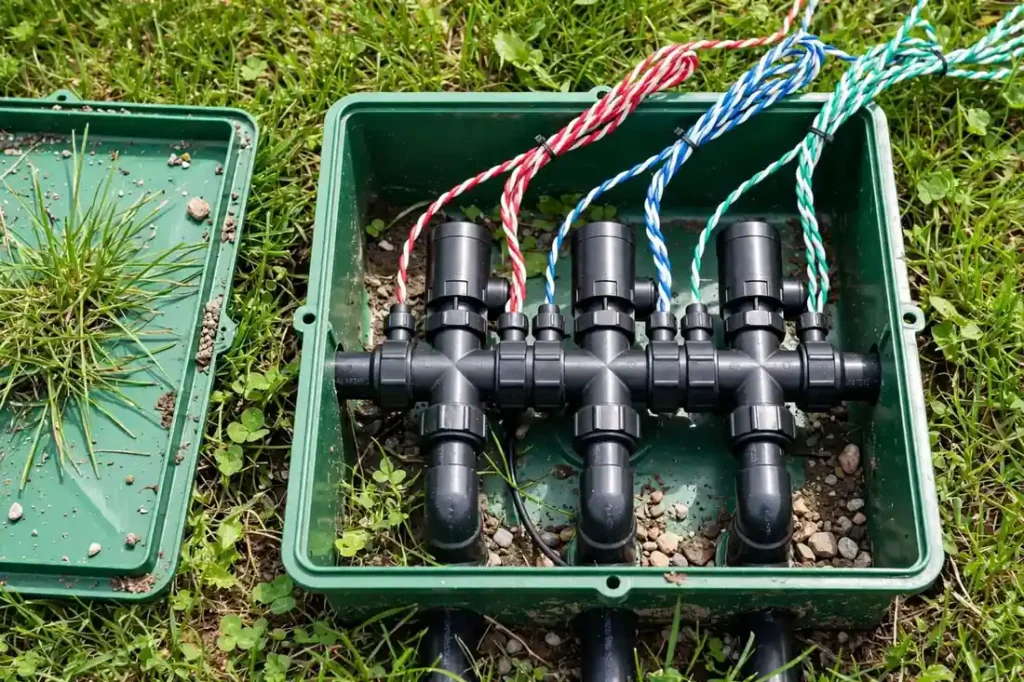
Zone valves are the muscle. Each valve controls one zone, opening electrically when the controller sends 24 volts and closing with spring pressure when the signal stops. Inside every valve is a rubber diaphragm — the single most-replaced wear part in irrigation. Valves live underground in valve boxes, which is why a flooded box usually means a valve problem.

5 & 6. Valve Boxes + Pipes (Mainline & Laterals)

Valve boxes are the green or black lids you see in lawns — they house the valves and keep soil off the wiring while allowing access for repairs. A box set too low becomes a catch basin; set on gravel and slightly above grade, it stays dry.


Pipes come in two kinds. The mainline runs from the water source to the valves and stays pressurized 24/7 — a mainline break leaks constantly. Lateral lines run from each valve to its heads and only pressurize when the zone runs — a lateral break leaks only during watering. In Florida, both are usually PVC buried 8–12 inches deep, which is why pressure loss often traces back to a cracked lateral.

7 & 8. Sprinkler Heads + Pressure Regulator

Sprinkler heads are the delivery endpoint: spray heads for small areas, rotors for large lawns, and drip emitters for beds. They’re the most visible part and the most abused — mowers, foot traffic, and sandy soil take their toll. A head that won’t pop up is almost always debris, a broken seal, or low pressure, not a dead head.


The pressure regulator keeps water pressure in the sweet spot (usually 30–50 PSI for sprays, higher for rotors). Too much pressure mists water into the air where it evaporates; too little and heads dribble. Many Florida neighborhoods have high municipal pressure, so regulators aren’t a luxury — they’re what keeps the whole system efficient.

9 & 10. Filters + Pump (Well Systems)

Filters trap sand, sediment, and debris before they reach valves and heads. On city water they’re a nice-to-have; on Florida well water they’re essential — fine sand will clog spray nozzles in a single season without one. A filter you never clean becomes the restriction that starves your zones.


The pump only exists on well or lake-fed systems, boosting water to usable pressure. Pumps are the most expensive single component and the one with a real lifespan — see our guide on how long irrigation pumps last to know the warning signs before it quits on a July afternoon.

Quick-Reference: All 10 Components at a Glance

ComponentWhat It DoesTypical Lifespan
Water SourceSupplies water (city, well, reclaimed)—
Backflow PreventerStops contamination of drinking water10–15 yrs
ControllerSchedules each zone10–15 yrs
Zone ValvesOpen/close water per zoneDiaphragm 3–5 yrs (FL)
Valve BoxesHouse valves, allow access15–20 yrs
Pipes (Mainline/Lateral)Transport water underground20–30+ yrs
Sprinkler HeadsDistribute water to lawn5–10 yrs
Pressure RegulatorKeeps PSI in ideal range10–15 yrs
FilterTraps sediment before valvesClean yearly
Pump (well systems)Boosts well water pressure8–15 yrs

Which Parts Fail Most Often in Florida

Florida is harder on irrigation than most states: systems run 12 months a year, sandy soil shifts pipes, afternoon storms flood boxes, and hard well water clogs everything. These three components generate the majority of our repair calls.

Why Florida Wears Parts Out Faster

Three Florida realities shorten component life. First, systems here run 12 months a year instead of 6 — every moving part cycles roughly twice as often as manufacturer lifespan estimates assume. Second, sugar sand shifts: pipes settle, heads tilt, and valve boxes sink into new low spots within a couple of seasons. Third, afternoon storms and the high water table keep everything wet, accelerating corrosion on valves, solenoids, and wire connections. Add hard well water clogging nozzles, and you get the failure pattern below.

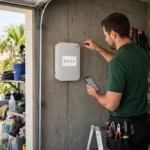
Irrigation system controller with digital display mounted on a Florida home exterior wall

3 Parts That Fail Most Often in Florida

Valves (Diaphragms Wear Out Twice as Fast Here)

The rubber diaphragm inside every zone valve flexes every cycle — and Florida systems cycle year-round, roughly double the national average. Expect 3–5 years from a diaphragm here versus 7–10 up north. Symptoms: a zone that weeps after shutting off, a valve box full of water, or a zone that won’t turn on at all. A rebuild kit is $15–$30 and a 30-minute DIY job.

Sprinkler Heads (Mowers, Sand & Clogs)

Heads live at ground level in abrasive sand — seals wear, nozzles clog, and lawn crews hit them weekly. If one head misbehaves while its neighbors are fine, it’s the head, not the system. Cleaning a clogged nozzle takes five minutes; replacing a head takes ten. See why heads stop popping up for the full diagnostic.

Controllers (Lightning Capital of the US)

Florida leads the nation in lightning strikes, and controllers are sensitive electronics wired to a giant underground antenna (your valve wires). A nearby strike can fry the transformer or individual zone terminals — the classic symptom is one dead zone while the rest run fine. A $15 surge protector at the controller is the cheapest insurance in irrigation.

What Each Component Costs to Repair or Replace

Typical Palm Coast / Flagler County ranges: sprinkler heads $10–$25 DIY ($75–$125 pro installed); valve diaphragm rebuild $15–$30 DIY; full valve replacement $150–$300 pro; controller $150–$400 depending on zones and smart features; backflow preventer $300–$600 installed; pipe repairs $100–$250 for accessible breaks. A diagnostic service visit runs $75–$150 — worth it when you’re guessing between a $20 part and a $300 one. Our sprinkler system cost guide covers full installations.

Keeping Every Component Alive Longer

Four habits cover all ten components: run each zone monthly and watch it (catches 90% of problems early); clean filters and nozzles every spring; keep valve boxes on gravel and above grade; and winterize the backflow preventer even in Florida — one freeze night cracks it. Systems that get this attention last 20+ years; neglected ones start nickel-and-diming you at year seven.

Sprinkler Problems in Palm Coast? We'll Find the Faulty Part

Now you know what each component does — but finding which one failed still takes trained eyes and the right tools. If a zone won’t run, won’t shut off, or your water bill suddenly jumped, don’t replace parts blindly.


Call (386) 237-2983 — we diagnose and repair every component above across Palm Coast and Flagler County: valves, heads, controllers, pumps, backflow preventers, and buried pipe. One visit, honest diagnosis, clear price.

Frequently Asked Questions

What are the main components of a residential irrigation system?

The ten main components are: water source, backflow preventer, controller, zone valves, valve boxes, mainline and lateral pipes, sprinkler heads, pressure regulator, filters, and (on well systems) a pump. Together they move water from the source to each zone on schedule.
Which irrigation component fails most often?

Zone valves — specifically the rubber diaphragm inside them. In Florida’s year-round watering climate, diaphragms typically last 3–5 years. Symptoms include zones that weep after shutting off, flooded valve boxes, or zones that won’t activate.

What is the most expensive part of a sprinkler system to replace?

The pump on well systems ($500–$1,500+ installed) and the backflow preventer ($300–$600 installed). Controllers with many zones can also run $300–$400. Individual heads and valve rebuild kits are inexpensive by comparison.

Do I need a backflow preventer in Florida?

Yes — Florida plumbing code requires backflow prevention where irrigation connects to potable water, and most counties require annual testing by a certified tester. It’s the component that protects your drinking water from fertilizer and soil contamination.

How long do irrigation system components last?

Sprinkler heads 5–10 years, valve diaphragms 3–5 years in Florida (7–10 up north), controllers 10–15 years (unless lightning strikes), PVC pipe 20–30+ years, pumps 8–15 years. Regular maintenance pushes every number higher.

Can I replace irrigation parts myself?

Heads, nozzles, diaphragms, and filters are easy DIY — basic tools and 30 minutes. Leave backflow preventers (code-regulated), pump work (electrical + plumbing), and buried pipe repairs to a pro. When in doubt, a $75–$150 diagnostic visit beats guessing.

Facebook
X
WhatsApp