Call (386) 237-2983 to talk to a real person on our team — not a call center.
Book a pump diagnosis online in under a minute. Click hereto pick a time.
A dead pump takes the whole system down. Most calls seen within 24–48 hours.
Irrigation Pump Repair, Replacement and Installation
One part, and every zone on the property depends on it.
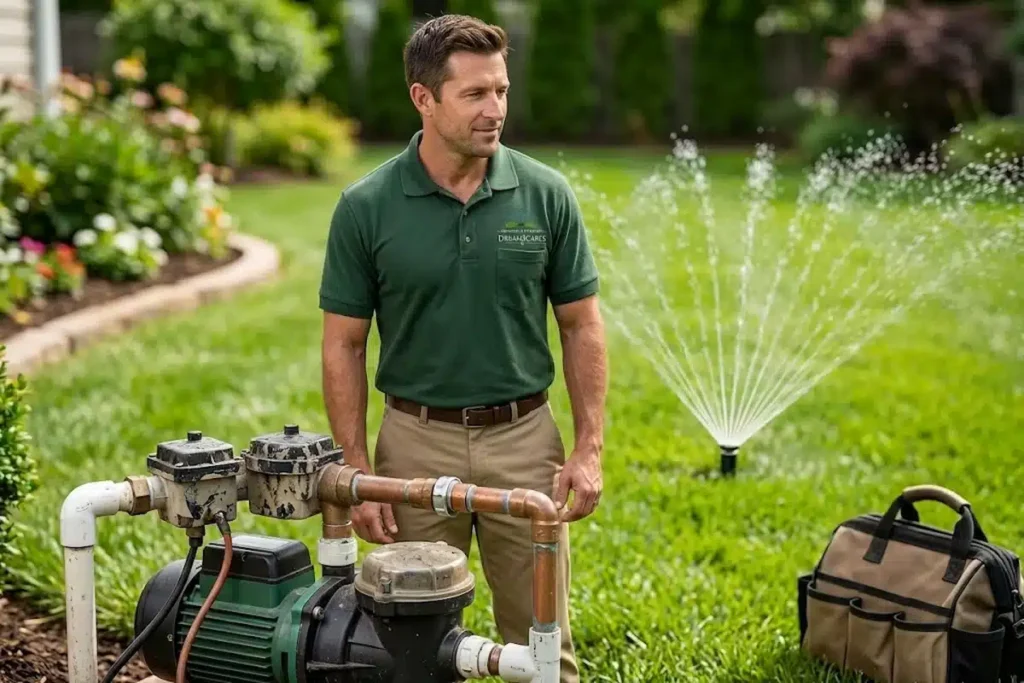
When a head breaks you lose one patch of grass. When the pump goes, nothing runs at all. Most calls we get are a pump that will not hold prime, one that starts and stops every few seconds, or one that hums and trips the breaker without turning over.
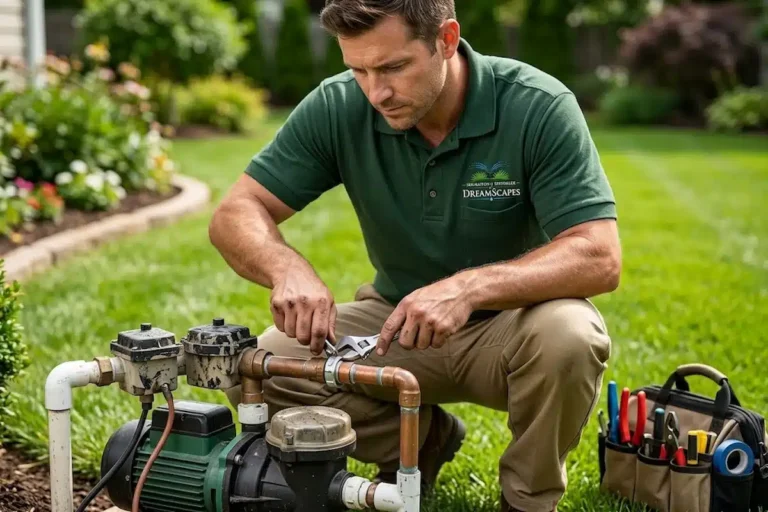
We start with the diagnosis, not the quote. Suction line, foot valve, impeller, pressure switch, tank charge, and the electrical side all get checked before we say a word about a new unit. Plenty of pumps written off by other companies needed a $40 part. Pump condition is also reviewed during every irrigation system maintenance visit.
A pump that short cycles is not just noisy. Every start draws heavy current and wears the motor, so a $60 pressure switch left alone for a season turns into a full replacement.
What Palm Coast Does to Irrigation Pumps
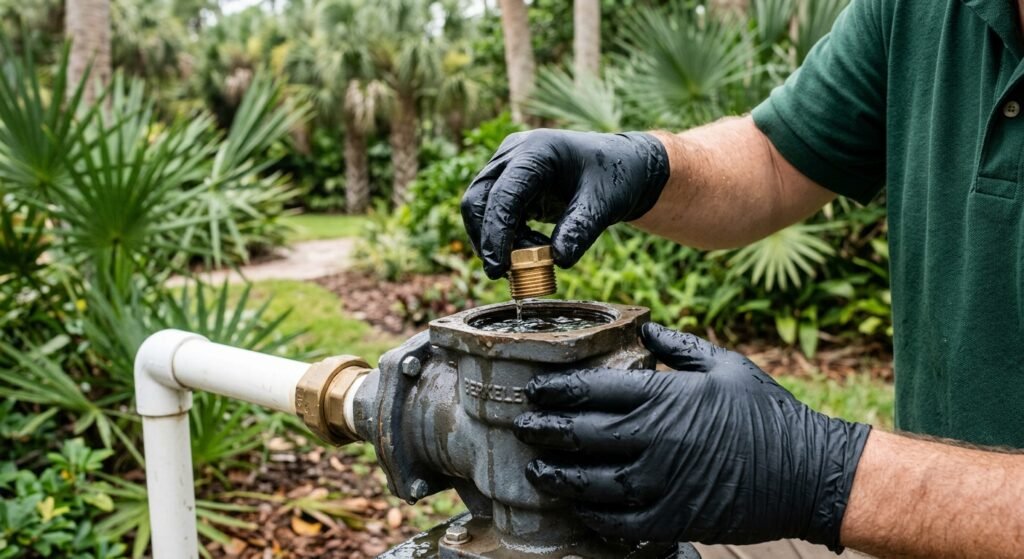
Most properties here pull from a shallow irrigation well, and this sand is hard on equipment. Grit chews impellers, iron and sulphur build up inside the housing, and salt air corrodes fittings on exposed units. Add a pump left running through a summer without a check and the failure is rarely sudden. We have been servicing well and booster pumps across Flagler County since 2015. Systems we install from scratch get the pump sized to the property rather than whatever fits the budget.
Low pressure at the heads usually means something else. A clogged suction screen, a leaking foot valve, a waterlogged pressure tank, or a zone carrying more heads than the flow can supply. Fit a larger pump on top of any of those and you get the same weak spray, a higher power bill, and a unit running well outside its range. We measure flow and pressure first, then decide. Getting that balance right is the foundation of irrigation system design.
You prime it, it runs, and by the next cycle it is dry again. That is air getting into the suction side, and the cause is almost always a failed foot valve, a cracked suction line, or a loose fitting below the water line. We pressure test the suction side to find where it is drawing air rather than priming it again and hoping.
Short Cycling and Tank Failure
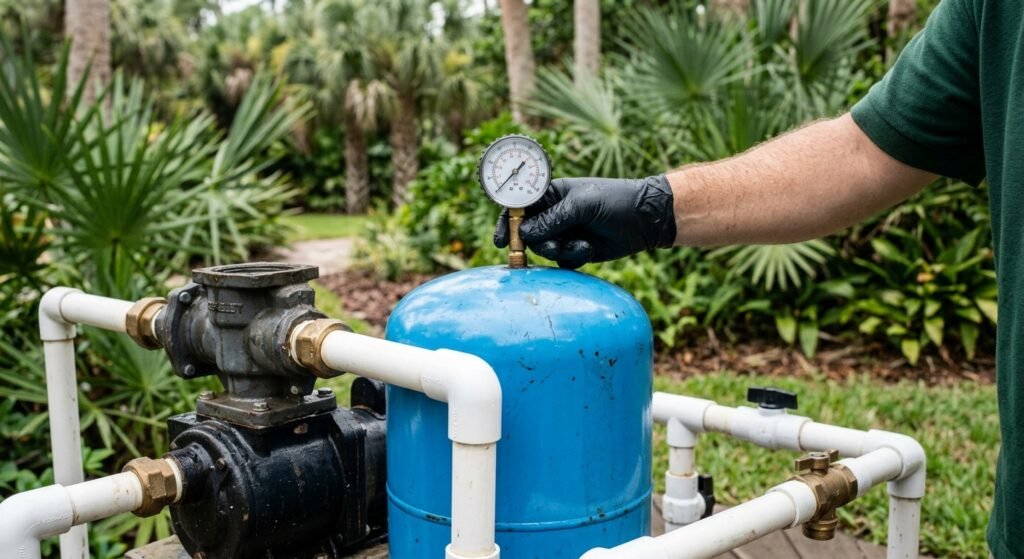
A pump that clicks on and off every few seconds has lost the cushion that should be holding pressure between starts. Usually the bladder in the pressure tank has gone or the tank has waterlogged. Either way the motor is taking a beating on every start, so it gets sorted before it takes the pump with it.
Humming, Tripping and Not Starting
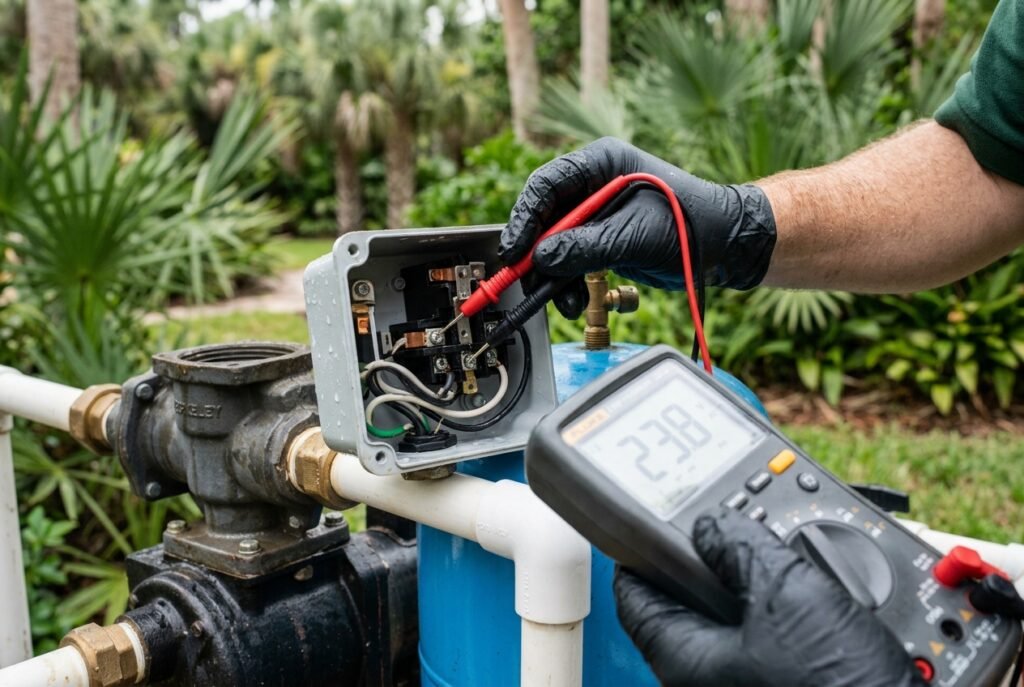
A pump that hums without turning is usually a seized impeller, a failed start capacitor, or a corroded pressure switch contact. Repeated breaker trips point at the motor windings or the wiring itself. We test the electrical side properly, because guessing here is how a repairable pump becomes a replacement.
Great company. I used them to redo the landscaping for my entire front yard. They were fast, clean, and professional. They were even very understanding when we requested some minor changes mid-project. Don’t hesitate using Dreamscapes.
maurizio b
2 years ago
Kara Dixon
2 years ago
We are so pleased With Harry
And his crew! We are
Building a home
And another landscaper
Was supposed to arrange for
Our sod to be laid. Never
Heard from them and delay,
Delay, delay. My
Husband happened to see Harry from Dreamscapes working on the landscaping at another house and spoke
To him. He
Performed miracles and was able
To
Get
Us sod
In under a week! Truly amazing! He cares about
His work and his customers. He even helped
My
Husband with our irrigation system to make
Sure it was installed properly. It is VERY hard to find hard workers these
Days! Thrilled to have
Found Harry
At
Dreamscapes,
HIGHLY recommend. In fact if we need ANY landscaping or
Irrigation assistance we will
Call him in a second. He is trustworthy, hardworking and runs a superior business. We
Thank you
For
Making things
Happen for
Us and really
Appreciate you!!!
Why Homeowners Call Us for Pump Work
Irrigation is the only thing we do. No mowing, no landscaping, no side jobs. That means a pump fault gets diagnosed properly instead of swapped out because it was quicker.
Since 2015 we have serviced systems across Palm Coast, Flagler Beach and Bunnell — 930+ properties, rated 4.5★ by the people who live here. We also handle pump work on commercial properties.
How much does it cost to replace a sprinkler pump?
A standard residential irrigation pump runs $600 to $1,400 fitted, depending on horsepower and whether the wiring and tank need work. Repairs are far cheaper, which is why we diagnose first.
Why does my sprinkler pump keep losing prime?
Air is getting into the suction side. The usual causes are a failed foot valve, a cracked suction line, or a loose fitting below the water line.
Why does my irrigation pump turn on and off repeatedly?
That is short cycling, and it nearly always means the pressure tank has lost its air charge or the bladder has failed. Left alone, it burns out the motor.
How long does an irrigation pump last?
Eight to fifteen years in Florida. Sand, iron content, and pumps that short cycle all shorten that. Regular checks add years to it.
Should I repair or replace my sprinkler pump?
If the motor is sound and the fault is a switch, capacitor, foot valve, or tank, repair is worth it. A seized or burnt-out motor on an older unit is usually not.
Can I run my irrigation on city water instead of a well pump?
Yes, but it puts irrigation back on your monthly bill and city pressure may not support the zone layout the well was sized for. Both options fall under the same one-day-a-week restriction.