Most system problems trace back to the design, not the parts. We measure, test, and map before anything goes in the ground.
Call (386) 237-2983 to talk to a real person on our team — not a call center.
Request your free estimate online in under a minute. Click here to book.
Enjoy award-winning service with 100% satisfaction guaranteed!
Measured, tested, and mapped before anything goes in the ground.
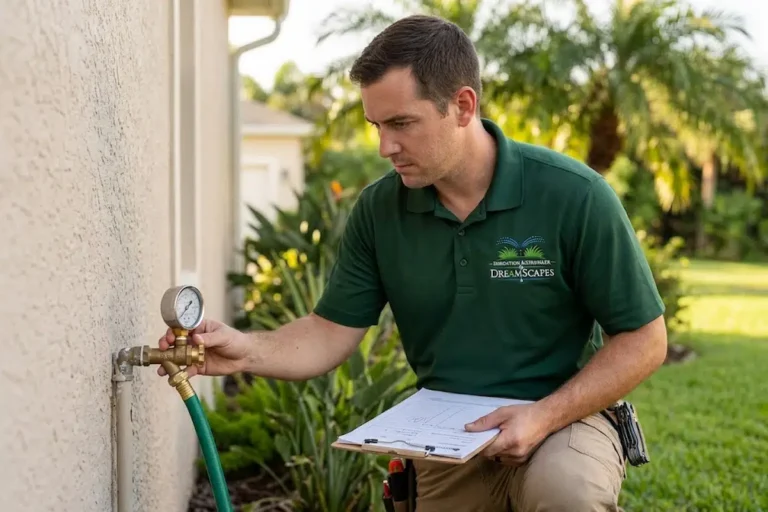
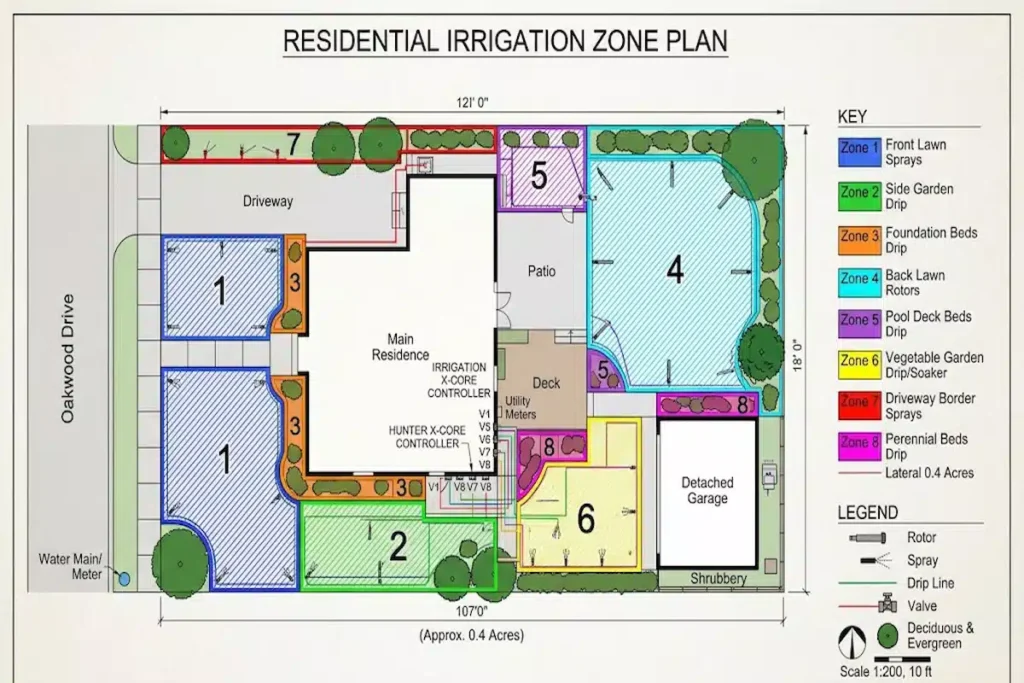
Design starts with a walk of the property. We check soil type, slope, sun and shade patterns, existing plant beds, and where the hard edges are. Then we test your supply — static pressure, flow rate, and available volume at the point of connection. Those numbers decide how many heads a zone can carry.
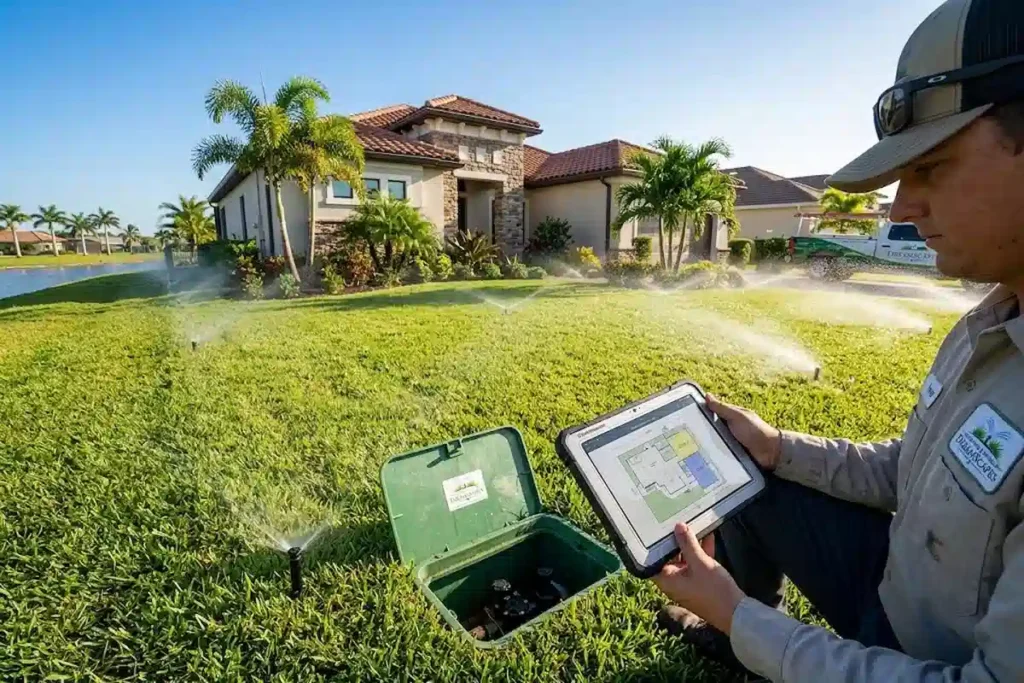
From there we draw the layout. Turf gets rotors, beds get sprays or drip, and areas that dry at different rates get separated onto their own zones. You see the zone map and the head count before you approve anything, so there are no surprises once the work starts.
Good irrigation system design is where the savings start. Zone planning, head spacing, and pressure decisions made at the design stage determine whether a system wastes water for the next twenty years — or uses 30–50% less than a poorly laid out one.
Most companies here treat irrigation system design as a step before installation. We treat it as the job. Get the zones, spacing, and pressure right on paper and the install becomes straightforward — and the system runs efficiently for two decades.
Pressure problems are cheap to solve on paper and expensive to solve later. Correcting it after installation means swapping out heads across the property. Specifying the right ones during irrigation system design costs nothing extra.
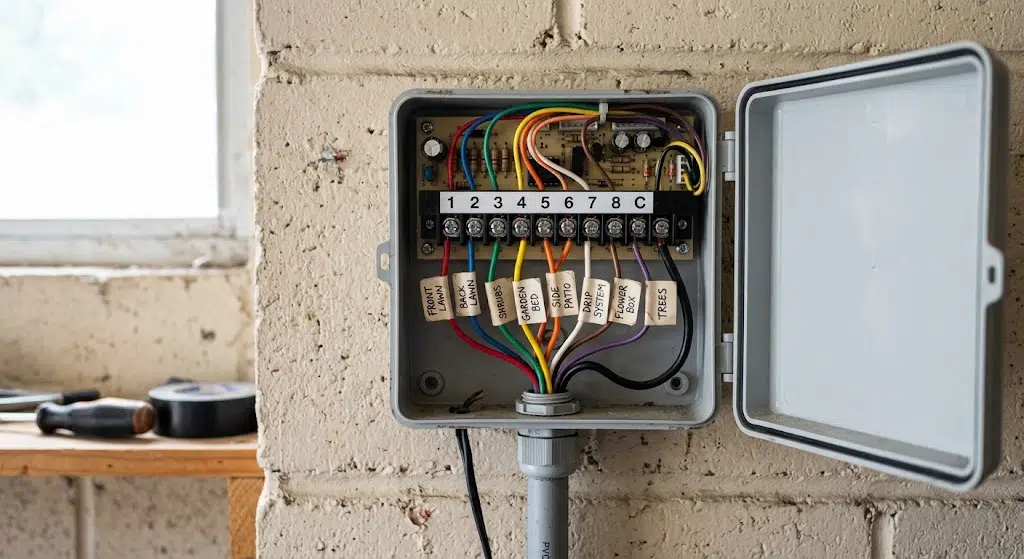
A smart controller can only run what your zone layout gives it. If two areas with different water needs share a zone, no schedule fixes that. Proper sprinkler system planning settles zone grouping first, then specifies a controller with enough stations to run each one independently.
Controllers come in fixed station counts, and running out means adding a second unit later. Our irrigation planning process counts the zones your property needs today, leaves room for beds you might add in a few years, and specifies the controller to match.
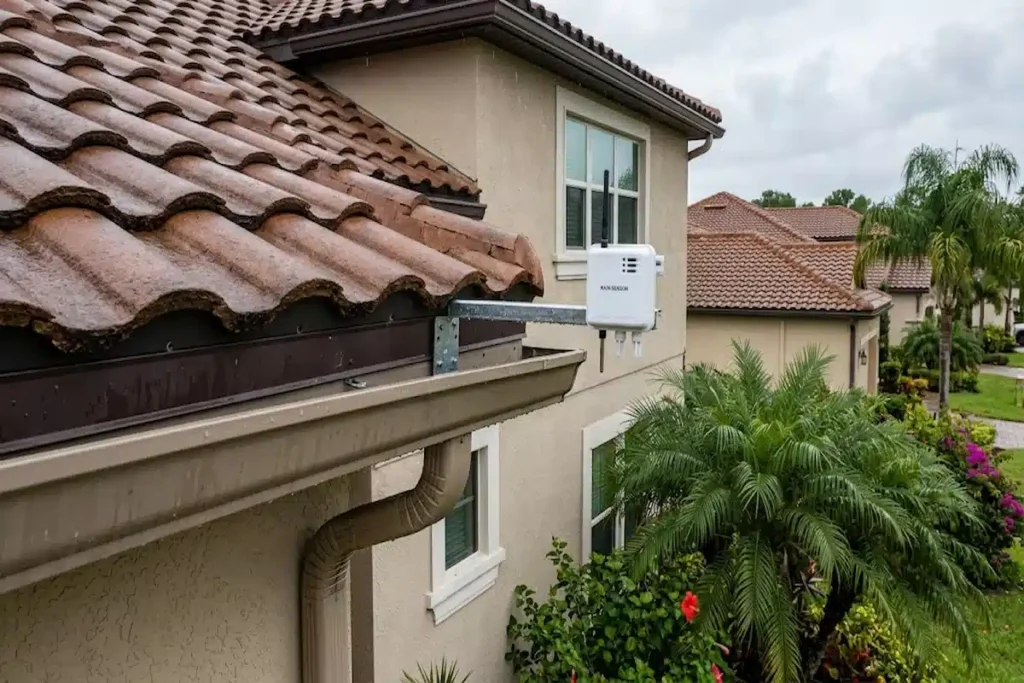
A rain sensor under an eave never gets wet. A soil sensor in the wrong zone reports the wrong number. During irrigation layout, sensor positions get marked alongside the heads, so the system reacts to real conditions instead of a shaded corner.
Irrigation is the only thing we do. No mowing, no landscaping, no side jobs. That means your sprinkler layout gets worked out by someone who does this every day, not fitted in between a mulch delivery and a mowing route.
Since 2015 we’ve handled irrigation design services across Palm Coast, Flagler Beach, and Bunnell — 930+ properties, rated 4.5★ by the people who live here.
What that looks like on your property:
Measure the property to scale, test pressure and flow at the source, group areas by water need into zones, space heads for head-to-head overlap, size the pipe, then place valves and the controller.
Most residential zones run 4 to 8 spray heads or 3 to 5 rotors. The exact number is your available GPM divided by what each head uses.
Yes. Zone grouping, head spacing, and pressure are all decided on paper. Changing them afterward means digging the property up again.
Two to three days from site survey to finished zone layout. Larger properties and well systems take longer.
Survey the property first, then test static pressure and flow rate at the water source. Those readings set the zone count. Group areas by water need, select head types, space them head-to-head, size the pipe per zone, and mark valve and controller placement on the plan.