⭐⭐⭐⭐⭐930+ Happy Customer Reviews

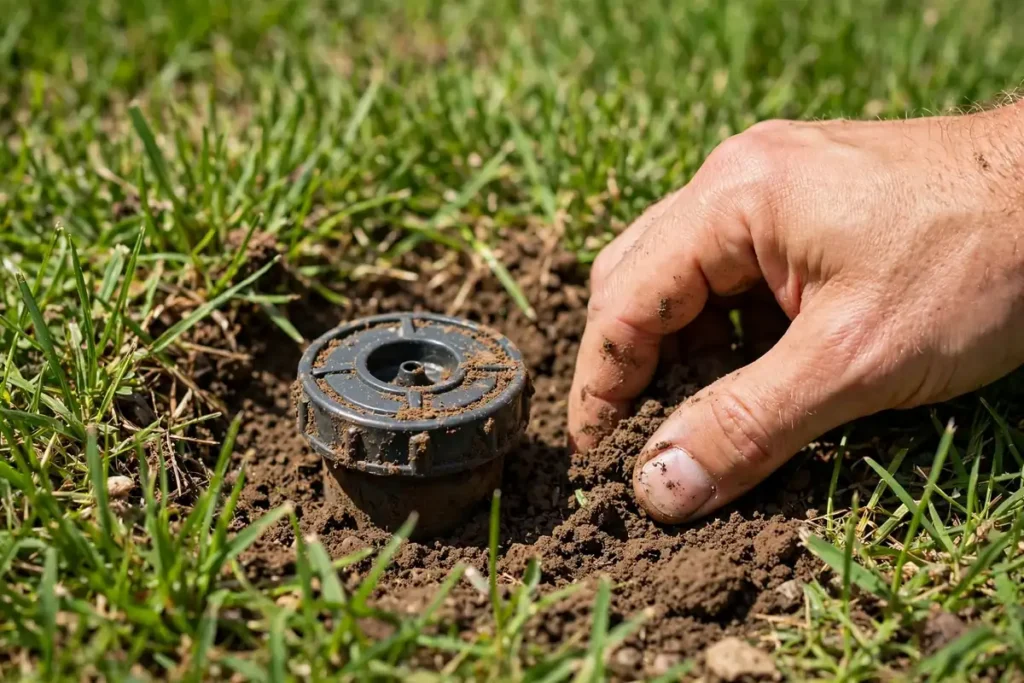
Hand clearing dirt from a sprinkler head that won't pop up

Sprinkler Head Won't Pop Up? Causes & Fixes

sprinkler-spray

Nothing is more frustrating than watching your sprinklers run while one head sits stubbornly in the ground, leaving a brown patch that keeps growing. A sprinkler head that won’t pop up is one of the most common irrigation problems Florida homeowners face — and the good news is that most causes are simple, cheap fixes you can handle yourself in a few minutes.

Why Won't My Sprinkler Head Pop Up?

Pop-up sprinkler heads work on a simple principle: water pressure pushes a spring-loaded riser up out of its housing, and when the zone shuts off, the spring pulls it back down. Anything that interferes with that movement — or with the pressure driving it — keeps the head stuck in the ground.


The seven most common causes, in order of likelihood, are: dirt and grass packed around the head, a clogged filter or nozzle, low water pressure, a cracked or worn-out head, a zone valve that isn’t opening fully, a leak in the line, and (rarely) a controller or wiring fault. Work through the fixes below in order — most homeowners solve it by Fix 2.

Quick Diagnosis: Find the Cause in 60 Seconds

Run the problem zone and watch the stuck head for one full minute. What you see points straight at the cause:


  • Water leaking or bubbling around the base — the head or its seal is damaged (jump to Fix 4).
  • The head strains upward but can’t quite rise — debris is jamming it, or pressure is low (Fix 1 or Fix 3).
  • No water at all from that head — clogged nozzle/filter or a closed valve upstream (Fix 2 or Fix 5).
  • The whole zone is weak or dead — the problem is upstream of the heads; see the whole-zone section below.

5 Fixes That Solve Most Stuck Sprinkler Heads

These five fixes resolve the vast majority of stuck heads. Start at Fix 1 and work down — don’t skip ahead, because the simple causes are also the most common ones.

Fix 1: Clear Dirt and Grass From Around the Head

This is the number one cause, especially in Florida where St. Augustine grass grows aggressively over everything. Thatch, soil, and mulch pack tightly around the riser until it physically can’t push through.


Dig or cut a clean 2–3 inch ring around the head, down to the top of the housing. Pull out any grass runners growing over the cap. Run the zone again — if the head pops up, you’re done. To prevent it recurring, keep grass trimmed back from heads when you edge.

Fix 2: Clean the Clogged Filter and Nozzle

Every pop-up head has a small filter screen under the nozzle that catches sand and debris. In Florida, mineral-heavy well water and sandy soil clog these faster than most homeowners expect.


With the zone running, pull the riser up by hand (or use grip clamps to hold it). Unscrew the top, pull out the filter screen, and rinse it clean — soak it in white vinegar for 15 minutes if you see white mineral crust. Check the nozzle opening for grit, reassemble, and test. If water flow is still weak through a clean nozzle, replace the nozzle itself (a few dollars at any hardware store).

Fix 3: Restore Water Pressure to the Zone

A head can’t pop up without enough pressure behind it. Walk back upstream: make sure the main irrigation shutoff, the backflow preventer valves, and the zone valve are all fully open — a valve turned even a quarter-turn closed can starve a zone. Also check whether too many heads were added to one zone over the years; an overloaded zone splits pressure too thin for any head to rise properly.


If pressure is low across the whole system, not just one head, see our guide on how to fix low water pressure in a sprinkler system before replacing parts.

Fix 4: Replace a Broken Head or Riser

Lawn mowers crack heads, Florida sun makes plastic brittle, and worn seals let water squirt out around the riser instead of pushing it up (technicians call this “blow-by”). If you see water leaking between the cap and riser while it’s extended, the seal is shot.


Replacement is a 10-minute job: dig around the head, unscrew it from the riser or swing joint, and screw on a matching replacement — same brand and model keeps the spray pattern consistent with the rest of the zone. A new head costs $8–$20; don’t bother trying to repair a cracked one.

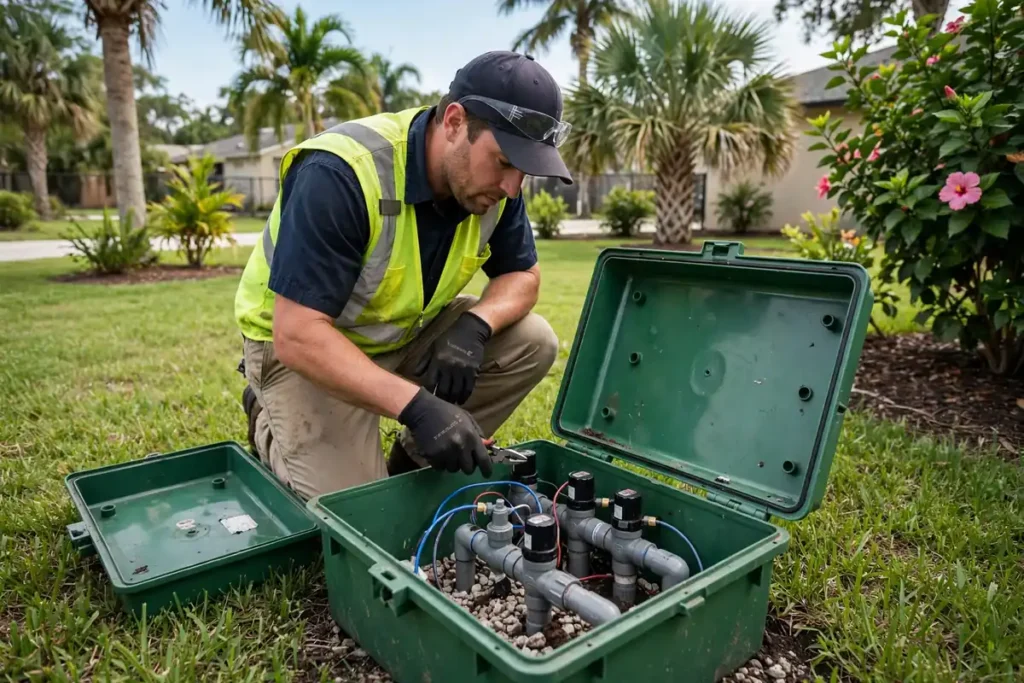
Fix 5: Check the Zone Valve

If the head is clean and intact but still won’t rise, the zone valve may not be opening fully. Debris lodged in the valve diaphragm or a failing solenoid restricts flow to the entire zone.


Open the valve box and try operating the valve manually — most have a bleed screw or a manual turn option on the solenoid. If the zone runs strong manually but not from the controller, you have an electrical issue (solenoid or wiring). If it’s weak both ways, the valve needs cleaning or rebuilding. Valve work involves water under pressure, so if you’re not comfortable, this is a good point to call a pro.

Step 5: Shut down the controller

Switch the controller to rain mode or off — don’t just unplug it. Rain mode keeps the programming intact for spring and, on smart controllers, still allows freeze-protection features to function. If your controller has a rain sensor (required by Florida law on systems installed after 1991), confirm it’s active; it’s your backup against a surprise warm-week watering cycle.

What If a Whole Zone Won't Pop Up?

When every head in a zone stays down, the problem is upstream of the heads themselves. Check in this order: (1) the zone valve — is it opening? Try it manually at the valve box; (2) the controller — is the zone actually programmed and sending 24 volts? A multimeter at the valve wires tells you in seconds; (3) a mainline leak — walk the zone’s pipe path and look for soggy ground or pooling water while it runs.


Whole-zone failures are where DIY diagnosis usually ends and professional repair begins, because you’re dealing with buried valves, wiring, or pipe.

Irrigation & sprinkler Technician inspecting sprinkler zone valves in a valve box

Why Stuck Heads Happen More in Florida

Florida is unusually hard on sprinkler heads. Sandy soil collapses back around housings every time you dig, so heads get buried faster here. Well water — common in Palm Coast and Flagler County — leaves mineral deposits that clog nozzles and filters. St. Augustine’s thick thatch creeps over low heads within a single growing season. And because systems here run year-round instead of 6 months, seals and springs simply wear out sooner.


The practical takeaway: Florida heads need attention about twice as often as the national guides assume. A five-minute check each spring and mid-summer prevents most stuck-head calls.

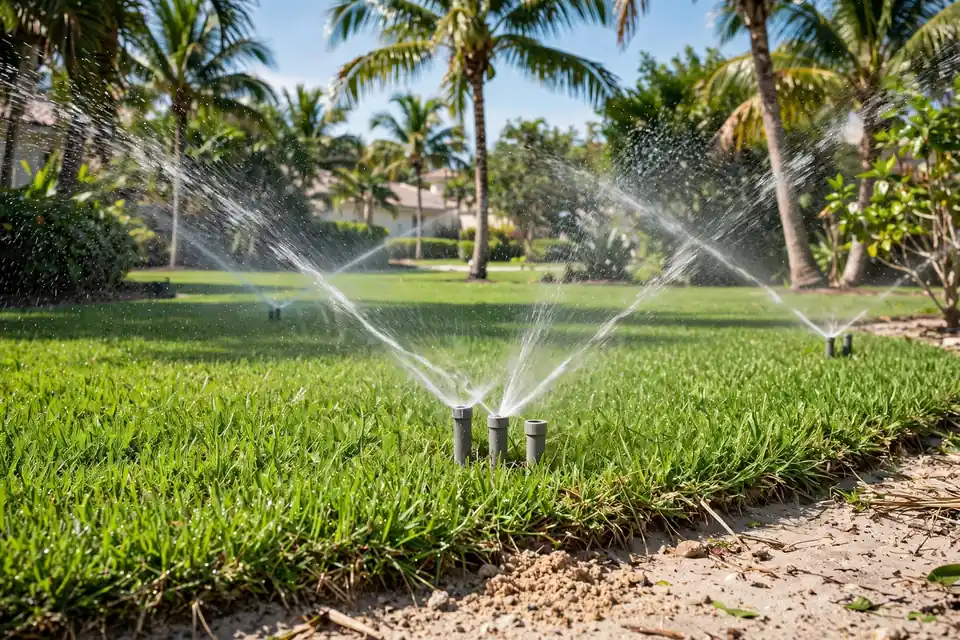
Pop-up sprinklers watering a Florida lawn with palm trees

3 Signs You Should Call a Pro Instead

Sign 1: Multiple Heads Are Down Across Zones

One stuck head is a head problem. Heads down across several zones is a system problem — usually the valve manifold, the controller, or the main supply. Diagnosing that correctly requires a multimeter, a wire tracer, and experience; guessing gets expensive fast when you start replacing parts blindly.

Sign 2: Water Is Pooling or the Ground Is Soggy

Pooling water or perpetually soggy spots while the system runs point to an underground pipe leak, not a head issue. Leaks waste enormous amounts of water and undermine soil under driveways and foundations. See our sprinkler system leak detection guide for what to check — but underground pipe repair is firmly pro territory.

Sign 3: You've Tried the Fixes and It's Still Stuck

If you’ve cleared, cleaned, and checked pressure and the head still won’t rise, something deeper is wrong — a crushed lateral line, root intrusion, or a failing valve. Our sprinkler head services cover exactly this: we diagnose the real cause and fix it in one visit instead of a weekend of trial and error.

How Much Does Sprinkler Head Repair Cost in Florida?

Typical Florida ranges: a DIY head replacement runs $8–$20 for the part and 10 minutes of your time; a nozzle alone is $3–$8. A professional service visit usually costs $75–$150 plus parts, which makes sense when multiple heads, a valve, or a leak are involved — the diagnostic alone saves you buying parts you don’t need.

For the full picture of what repairs run in this area, see our sprinkler repair cost guide for Northeast Florida.

Keep Your Heads Popping Up: A 5-Minute Seasonal Check

Twice a year — at spring startup and mid-summer — walk each zone while it runs and look at every head: does it pop fully? Is the spray pattern even? Is anything leaking around the base? Clear grass from around any buried heads and flag anything weak for a filter cleaning. Five minutes per zone, twice a year, prevents nearly every stuck-head emergency.

Stuck Sprinkler Heads in Palm Coast? We'll Fix Them Today

Some stuck heads take five minutes. Others hide a valve or leak problem that wastes water every single cycle. If you’ve worked through the fixes above and something still isn’t right — or you’d rather skip straight to the answer — call us at (386) 237-2983.


We handle sprinkler repair across Palm Coast and Flagler County every day: stuck heads, weak zones, valve issues, and leaks. One visit, honest diagnosis, clear price.

Frequently Asked Questions

Can I fix a sprinkler head that won't pop up myself?

Yes — clearing debris from around the head and cleaning the filter and nozzle fixes most cases in minutes with no special tools. If the head is cracked, it’s a simple unscrew-and-replace with a matching head. Call a professional for valve, wiring, or underground leak problems.

How much does it cost to replace a sprinkler head?

A replacement head costs $8–$20 at a hardware store and takes about 10 minutes to swap yourself. A professional service visit in Florida typically runs $75–$150 plus parts, which is worth it when multiple heads, a valve, or a hidden leak are involved.

Why do all my sprinkler heads have low pressure?

When every head is weak, the problem is upstream: a partially closed main or backflow valve, a failing pressure regulator, or a mainline leak. Check that all valves are fully open first — it’s the most common cause and the simplest fix.

Should I replace the whole head or just the nozzle?

If the body and riser are intact and only the spray pattern is off, a $3–$8 nozzle swap is enough. Replace the whole head if it’s cracked, if water leaks around the seal while extended, or if the riser won’t stay up.

How often should I check my sprinkler heads?

Walk your system twice a year — at spring startup and mid-summer — plus a quick look any time you spot a brown patch. Florida’s year-round watering season wears heads faster than in northern states, so don’t skip the checks.

Will a stuck sprinkler head raise my water bill?

It can. A head with a damaged seal leaks water around its base every cycle, and a struggling zone often gets longer run times to compensate — wasting even more. Fixing a stuck head promptly usually pays for itself within a month or two.

Facebook
X
WhatsApp