⭐⭐⭐⭐⭐930+ Happy Customer Reviews
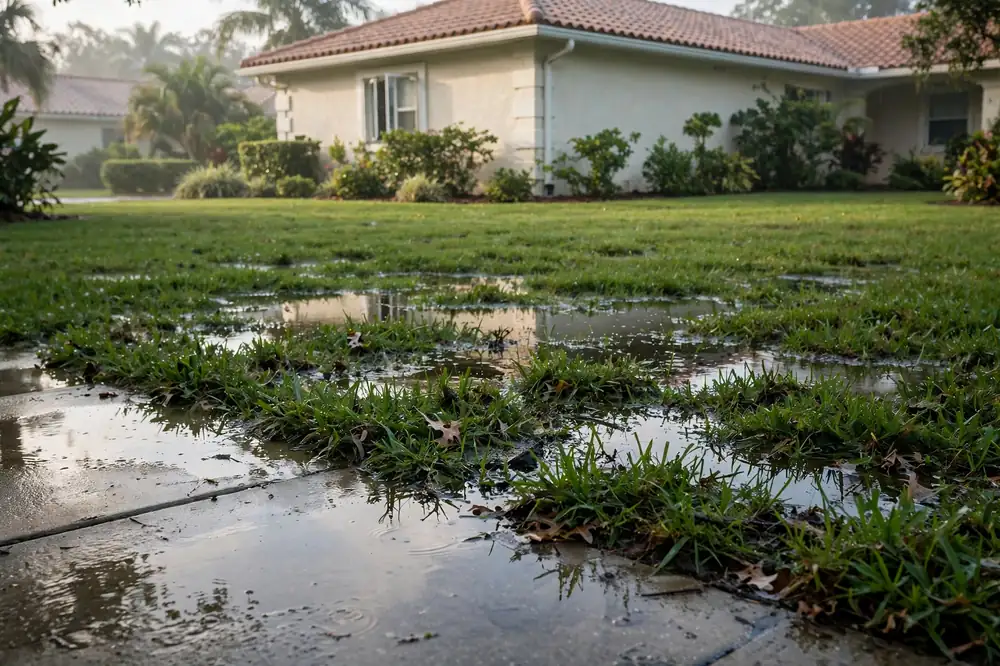
Over-irrigation fills the air spaces in soil with water, so roots lose oxygen. In sandy Florida soil, extra water also washes nitrogen below the root zone and into groundwater. The wet, weak turf that follows is prone to root rot, fungus, and shallow roots.
Key takeaways:
Over-irrigation is any watering beyond what the roots can use before the next cycle. It is not a fixed number of minutes, because minutes mean nothing without knowing how much water your heads actually put down. A zone that delivers an inch in 20 minutes and a zone that delivers a quarter inch in the same time are not doing the same thing, even though the controller shows the same run time. The honest test is in the soil: if the ground stays soggy between cycles, if water runs off the lawn onto the sidewalk, or if the turf never firms up underfoot, you are putting down more than the soil and roots can handle.
Palm Coast soil is mostly sand, and sand changes the damage. Sand drains fast and holds very little water or nutrition, so excess irrigation does not sit there the way it would in clay. Instead it moves straight down, carrying dissolved nitrogen and other nutrients below the root zone, where the grass can no longer reach them. That is the leaching half of the story, and it is the half most Florida lawns live with.
The other half shows up in low spots, in yards with a high water table, and in beds where a sprinkler keeps hitting the same corner: there the water has nowhere to go, the pores stay full, and roots suffocate. Reclaimed water adds a smaller wrinkle worth knowing: where drainage is poor, salts can build up in the soil over time, so a reclaimed-water lawn that stays wet deserves a closer look, not just a longer run time.
None of these six works alone. Oxygen loss weakens roots, weak roots take up less nutrition, and thin, shallow turf then invites the fungus and weeds that finish the job.
Healthy soil is roughly half solid and half pore space, and in a well-watered lawn those pores hold a mix of water and air. Roots breathe through that air. When irrigation keeps the pores full of water, oxygen cannot get in, and root cells start to die back from the tips. The lawn above ground tells on it first: growth slows even though water is plentiful, colour dulls, and the turf feels soft and spongy rather than springy.
Every extra inch of water moving down through sand carries dissolved nutrients with it. Nitrogen is the first to go, because nitrate moves freely with water, and once it passes below the root zone it is gone for good — the grass cannot pull it back up. The lawn then looks hungry despite regular feeding, which tempts people to fertilise more, and the next overwatering washes that away too.
UF/IFAS notes the wider cost as well: nitrogen that reaches groundwater and surface water can feed algal growth, which is a real concern in a canal-laced city like Palm Coast. Overwatering is not just wasted water; it is wasted fertiliser, and it exports both off your property.
Repeated soaking followed by traffic — mowing, walking, playing — presses wet soil particles together and collapses the pore structure that air and water are supposed to move through. On the surface this shows up as a crust that sheds water instead of absorbing it, so the next cycle runs off even faster. Underneath, the compacted layer traps water above it, which makes the oxygen problem worse.
Wet, airless soil is exactly the condition root-rot organisms prefer. UF/IFAS links excessive watering, heavy rain, and poor drainage to pythium root rot and take-all root rot, and notes that long leaf wetness raises infection risk generally. The pattern is recognisable: patches thin out, pull up easily because the roots are gone, and the damage spreads fastest in the wettest corners of the yard. Fungus on the blades — grey leaf spot and similar diseases — follows the same wet-leaf logic. Spraying fungicide on a lawn that is still being overwatered treats the symptom while the cause keeps running every morning.
Roots grow where the water is. Water a little bit every day and the moisture never gets deep, so roots have no reason to grow down — they stay in the top inch or two of soil. A shallow-rooted lawn then needs water even more often, because the top layer dries out first in Florida sun, which locks the homeowner into the very schedule that caused the problem. It also makes the lawn fragile: a missed cycle, a hot weekend, or a controller fault turns into visible stress within days. Deep, infrequent watering that matches the UF/IFAS amount — about 0.5–0.75 inch, only when the turf shows drought stress — is what pushes roots down instead.
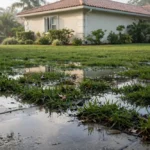
Once soil cannot absorb any more, the rest of the cycle becomes runoff. That runoff carries fertiliser, loose sediment, and whatever else was sitting on the surface out to the sidewalk, the street drain, and eventually the nearest waterway. Runoff is also the most visible sign that the schedule is wrong, because a correctly watered lawn should absorb its cycle, not shed it. If water regularly reaches the pavement, the zone is delivering more than the soil can take, whatever the controller says.
Squishy turf that stays soft days after watering. Mushrooms popping up in the lawn, or a green film of algae on the soil surface. Yellow patches that do not respond to feeding — for help telling overwatering yellowing from other causes, see our guide on why grass turns yellow, which owns the diagnosis side of that question. Runoff reaching the sidewalk during a normal cycle.
Weeds that love wet ground, dollarweed above all, spreading in the dampest areas. And a lawn that looks worse, not better, the more it is watered. Two or more of these together mean the soil is telling you something; the next section is about finding out whether the schedule or the hardware is saying it.
Half the overwatered lawns we see are not a scheduling mistake at all. A zone valve stuck open keeps one area wet around the clock — if the valve box itself holds standing water, that is a strong clue, and our valve box guide shows what to look for. A cracked lateral or a leaking fitting soaks one strip while the rest of the zone runs normally; our leak detection guide walks through finding it.
A rain sensor that has failed, or been bypassed, lets the system water straight through a rainy week. Mismatched heads on one zone — sprays and rotors mixed together — deliver wildly different amounts of water in the same run time, so part of the zone drowns while another part stays dry. And the simplest cause of all: run times set years ago for a new lawn, never adjusted as the turf established. Work through those in order — valve, leak, sensor, heads, schedule — before you touch the controller, because reprogramming a system with a stuck valve only changes which days it floods.
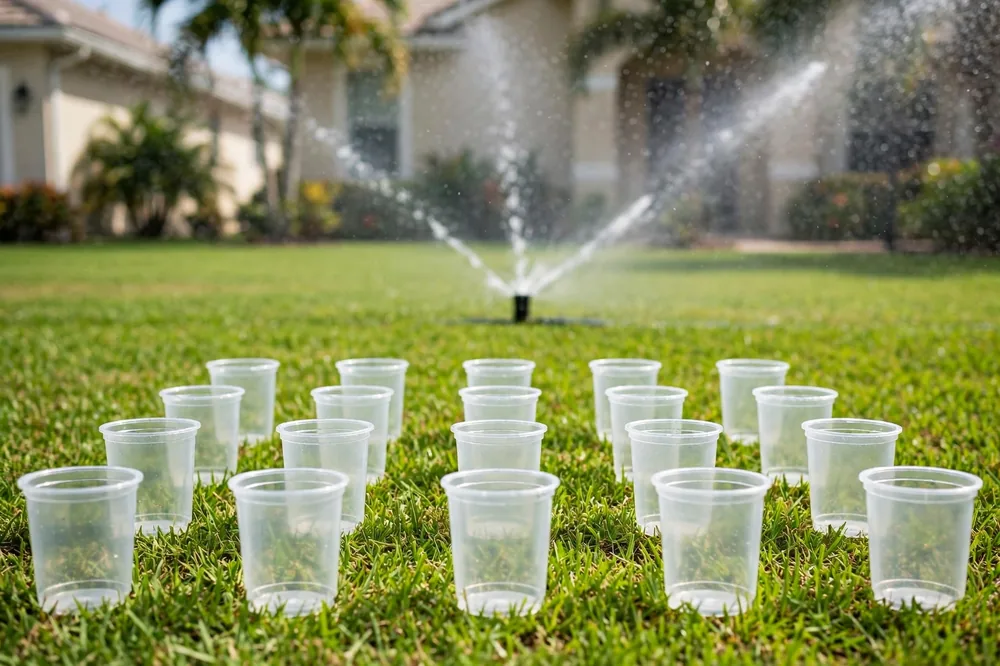
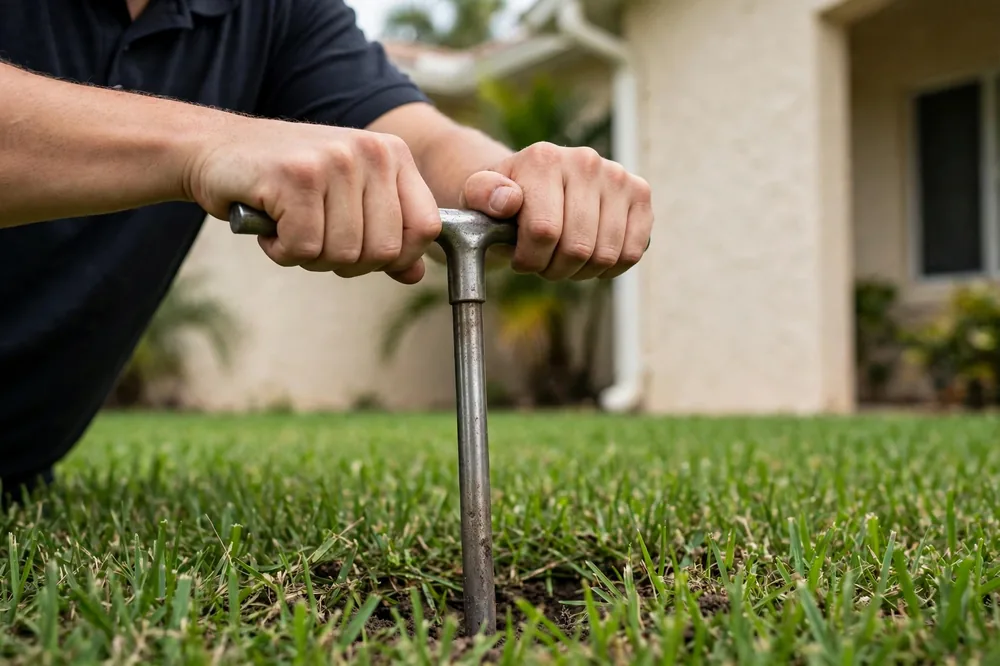
Stop guessing and measure. Push a soil probe into the lawn after a normal cycle: on a properly watered lawn it should slide 6–8 inches, per UF/IFAS guidance. If it stops at two inches, the water is not getting down; if the core comes out dripping, too much went in. Then run a catch-can test: set straight-sided cups across one zone, run it for 15 minutes, and multiply the average depth by four to get inches per hour.
That single number replaces every argument about run times, because it tells you what the zone actually delivers. A zone delivering an inch an hour does not need the same schedule as a zone delivering a quarter inch, and until you know which one you have, every adjustment is a guess.
UF/IFAS guidance is to water about 0.5–0.75 inch, and only when the turf shows drought stress — folded blades, a dull bluish tint, footprints that stay visible after you walk across the lawn. Water in the early morning so the blades dry during the day; evening watering leaves leaves wet all night, which is when fungus gets its foothold. Keep to your SJRWMD watering days, and resist the urge to add a “bonus” cycle on a hot afternoon — in sandy soil that extra water mostly leaches straight past the roots, and in a low spot it just refills the puddle.
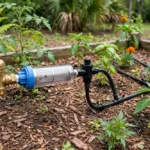
If a drip bed stays soggy after you fix the timer, check the bed’s pressure as well — our pressure reducer guide explains why a drip zone fed at full house pressure waters unevenly — and remember that sprinkler and drip zones need different schedules, not one shared run time.
Make the system stop itself. A working rain sensor — required on Florida automatic systems installed after May 1, 1991 — should shut the controller down during and after rain; if yours does not, test or replace it before anything else, because no schedule survives a dead sensor. A smart controller goes one step further by skipping cycles based on weather and soil moisture rather than running blind on a calendar, which is exactly the protection a sandy-soil lawn needs. Neither device fixes a stuck valve or a leak — do those checks first.
Yes, in most cases, and faster than people fear — provided the water going in actually changes. Once cycles match what the roots can use, oxygen returns to the pore spaces within days to weeks, and new root growth follows as the turf re-establishes. Aeration helps where the surface has compacted, by reopening channels for air and water, and it is worth doing once the lawn has dried enough to work on rather than while it is still soggy.
What does not recover on its own is nitrogen already leached below the root zone; that has to be replaced by feeding on a corrected schedule, not by feeding more on the old one. If a patch stays dead after a full season of corrected watering, the roots there are likely gone and that area needs re-sodding, not more water.
Call for an audit when the signs point in several directions at once: wet and dry patches in the same zone, a valve box that never dries out, a rain sensor you are not sure works, or run times nobody has checked since the system was installed. An audit measures what each zone actually delivers, finds the valve or leak hiding behind the schedule, and resets run times to the UF/IFAS amount for your soil and grass — which is usually less water, not more. See our sprinkler repair page for what an inspection covers.
We inspect irrigation systems across Palm Coast and Flagler County every week — zone-by-zone delivery rates, valves, leaks, rain sensors, and run times set for sandy soil and St. Augustine grass.
Call (386) 237-2983 for an irrigation audit: we will measure what each zone actually puts down, find the valve, leak, or sensor behind the wet patches, and reset your schedule to what the soil can use — before the next cycle does more damage. See our irrigation maintenance page for what a visit covers.
It fills soil pores with water, pushing out the air roots need, and in sandy Florida soil it washes nitrogen below the root zone. The result is weak, shallow-rooted turf prone to root rot and fungus, plus runoff carrying fertiliser and sediment off the yard.
Yes. Roots starved of oxygen die back, and the weakened turf is then finished off by root rot, fungus, or a hot spell it can no longer handle. Lawns rarely die from one wet week; they die from months of soggy soil that never gets a chance to dry between cycles.
Look for squishy turf that stays soft days after watering, mushrooms or algae on the surface, runoff reaching the sidewalk during a normal cycle, dollarweed spreading in damp areas, and yellow patches that do not respond to feeding.
It creates the conditions fungus needs: wet soil and leaves that stay wet for long periods. UF/IFAS links excessive watering and poor drainage to pythium and take-all root rot, and long leaf wetness raises infection risk generally. Fixing the water usually matters more than spraying fungicide.
UF/IFAS guidance is about 0.5–0.75 inch per watering, and only when the turf shows drought stress — folded blades, a dull bluish tint, or footprints that stay visible. In sandy soil, more than that mostly leaches past the roots instead of helping the lawn.
Yes, especially nitrogen. Nitrate moves freely with water through sand, so excess irrigation carries it below the root zone where grass cannot reach it, and onward toward groundwater and surface water. Feeding more on an overwatered lawn mostly feeds the runoff, not the grass.
Usually, yes. Once watering matches what the roots can use, oxygen returns to the soil within days to weeks and new roots follow. Aeration helps compacted areas, and lost nitrogen needs replacing on the corrected schedule. Patches whose roots are fully gone may need re-sodding.