An irrigation pump lasts 8 to 15 years. In Florida, a shallow-well sprinkler pump pulling from sandy, iron-rich water usually lands around 8 to 10 years, while a submersible well pump or a well-maintained unit can reach 12 to 15 years or more. The biggest lifespan killers are short cycling, grit in the water, and a neglected pressure tank.
Key Takeaways
8 to 15 years is the typical lifespan of a residential irrigation pump.
Shallow-well and jet pumps average 8 to 10 years; submersible well pumps reach 12 to 15+ years.
Florida sand, iron-heavy well water, and salt air all push pumps toward the lower end of that range.
Short cycling from a waterlogged pressure tank is the fastest way to kill an otherwise healthy pump.
Annual maintenance, the right pump size, and quick repairs can add several years to a pump’s life.
How Long Do Irrigation Pumps Last by Type?
Not all irrigation pumps are built the same, and the type sitting on your property matters more than the brand name on the housing. Here is what we typically see across the systems we service in Flagler County:
Pump Type
Typical Lifespan
What Shortens It
Centrifugal end-suction (most sprinkler pumps)
8 to 12 years
Sand and grit wearing down the impeller
Shallow-well jet pump
8 to 10 years
Frequent cycling and air leaks on the suction side
Submersible well pump
12 to 15+ years
Iron, sediment, and lightning strikes
Booster pump (city water)
10 to 15 years
Pressure spikes and running against a closed valve
On the commercial side, the USGA puts pump stations at 15 to 20 years, but those are large, professionally maintained installations. For a residential system, plan around the ranges above. When we install a system from scratch, we size the pump to the property rather than the budget, because the right size is the first step toward the upper end of that lifespan.
What Shortens an Irrigation Pump's Life in Florida?
Florida is hard on pumps in ways that do not show up in a manufacturer brochure. Most of the premature failures we diagnose come down to five local factors:
Sandy Soil Chews Through Impellers
Fine sand gets past screens and acts like sandpaper inside the pump housing. Over a few seasons it wears the impeller down, and a worn impeller moves less water while making the motor work harder. This is the number one reason pumps here die closer to year eight than year fifteen.
Iron and Sulfur in Well Water
Northeast Florida wells are known for dissolved iron and sulfur. Iron leaves crusty buildup inside the housing and on the impeller, throwing the pump off balance. Sulfur is corrosive. Together they age a pump faster than clean water ever would.
Salt Air Corrodes Exposed Parts
Pumps installed outside near the coast take a beating from salt air. Fittings, mounting bolts, and electrical connections corrode, and corroded electrical contacts are behind plenty of “humming but not starting” service calls.
Short Cycling Wears Out the Motor
A pump that clicks on and off every few seconds is short cycling, almost always because the pressure tank has lost its air charge. Every start draws heavy current and hammers the motor windings. Left alone for a season, a $60 pressure tank issue turns into a full pump replacement.
The Wrong Size Pump for the Job
An oversized pump short cycles and wastes energy; an undersized one runs constantly and overheats. Either way the motor pays the price. Proper sizing during irrigation system design is what keeps a pump in its happy operating range for a decade or more.
7 Signs Your Irrigation Pump Is Failing
Pumps rarely die without warning. If you catch these signs early, a repair often buys you several more years. Ignore them, and you are usually looking at a replacement.
1. It Keeps Losing Prime
You prime it, it runs, and by the next cycle it is dry again. Air is leaking into the suction side, usually through a failed foot valve or a cracked suction line. Occasional re-priming is normal; doing it every week means something is wrong.
2. It Short Cycles On and Off
Rapid on-off starts mean the pressure tank has lost its air cushion or the bladder has failed. This is the single most destructive pattern for a pump motor. Fix the tank now and the pump often recovers fully.
3. It Hums, Then Trips the Breaker
A humming pump that never turns over usually has a seized impeller, a failed start capacitor, or corroded switch contacts. Repeated breaker trips point at the motor windings. This is the classic “repair or replace” decision point, and it is exactly what our pump diagnosis is designed to answer.
4. Pressure Drops at the Heads
Weak, uneven spray across every zone often traces back to a worn impeller or a pump that can no longer hold pressure. If you have already ruled out clogged nozzles, the pump is the next suspect. Our guide on fixing low sprinkler water pressure walks through the full checklist.
5. Your Electric Bill Creeps Up
A pump near the end of its life works harder to move the same water. If your irrigation-season power bills are climbing year over year with no change in watering schedule, the pump’s efficiency is fading.
6. Rust, Leaks, or Visible Corrosion
Water weeping from the housing seal, rust streaks, or green corrosion on fittings all signal internal wear. A leaking seal lets air in and water out, which accelerates every other failure on this list.
7. It’s Past 10 Years Old and Acting Up
Age alone is not a death sentence, but a pump past the ten-year mark showing any symptom above is living on borrowed time. At that point, putting big repair money into it rarely pays. Well pumps follow the same logic, which is why our well pump repair visits always include an honest assessment of remaining life.
How to Make Your Irrigation Pump Last 15 Years
Reaching the upper end of the lifespan range is not luck. It is a short maintenance routine, done consistently:
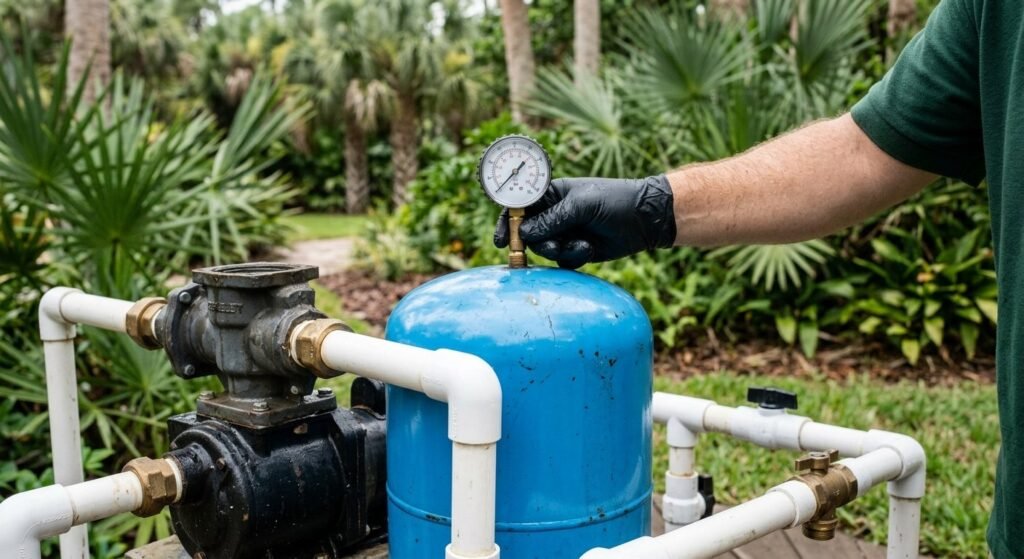
Check the pressure tank charge yearly. A tank that has lost air is the top killer of pump motors. Five minutes with a tire gauge catches it.
Test the foot valve and suction line. If the pump loses prime between runs, find the air leak instead of just re-priming it.
Clean the suction screen. Sand and debris packed against the screen starve the pump and overheat the motor.
Inspect electrical connections. Tighten terminals and look for corrosion, especially on outdoor units near the coast.
Run every zone and watch. Once a month, walk each zone while it runs. Uneven spray is an early warning worth acting on.
Schedule a professional tune-up. Pump condition, tank charge, and the electrical side all get checked during our irrigation system maintenance visits, which is how small issues get caught before they become replacements.
Should You Repair or Replace Your Irrigation Pump?
Use this simple rule: repair when the motor is sound and the fault is a single component; replace when the motor itself is gone or the pump is old and failing in multiple ways.
Repair It
Replace It
Motor runs strong; fault is a pressure switch, capacitor, foot valve, or tank
Motor seized, humming, or tripping the breaker on an aging unit
Pump is under 10 years old with one clear problem
Pump is past 12 to 15 years with repeated issues
Repair cost is well under half the price of a new pump
Repair estimate tops half the cost of replacement
Pressure and flow return to normal after the fix
Performance stays weak even after parts are replaced
A standard residential irrigation pump runs $600 to $1,400 fitted, depending on horsepower and whether the wiring, tank, or plumbing around it needs work. Repairs are far cheaper, which is why we always diagnose before quoting. If you are on the fence, book a pump diagnosis and get the answer in writing before spending anything.
Still Dealing With Pump Problems?
If your pump keeps losing prime, short cycling, or just sounds wrong, let us take a look. We are irrigation specialists serving Palm Coast and the surrounding areas since 2015, with 930+ systems serviced. Most pump calls are seen within 24 to 48 hours. Call (386) 237-2983 to talk to a real person on our team, not a call center.
Frequently Asked Questions
How long does a sprinkler pump last in Florida?
Typically 8 to 15 years. Shallow-well sprinkler pumps in Florida’s sandy, iron-rich conditions usually last 8 to 10 years, while submersible well pumps and well-maintained units reach 12 to 15 years or more.
Can an irrigation pump last 20 years?
It is possible but rare. A high-quality submersible pump in clean water with ideal sizing and regular maintenance can approach 20 years. Most residential sprinkler pumps will not get there, especially on shallow wells with sand and iron.
Does running my pump every day shorten its life?
Not by itself. What shortens life is how the pump runs: short cycling and running dry cause far more wear than steady, properly sized operation. Under Florida’s watering-day rules, most systems run one or two days a week, which is easy on the pump if the pressure tank is healthy.
Will a bigger pump last longer?
No. An oversized pump short cycles, wastes energy, and wears out faster. A pump matched to your zones’ flow and pressure needs lasts longest, which is why proper sizing matters more than horsepower.
Is it worth repairing a 12-year-old pump?
Sometimes. If the motor is sound and only one component failed, a repair can buy a few more years. If the motor is struggling or repairs cost more than half the price of a new pump, replacement is the smarter spend.
How much does it cost to replace an irrigation pump?
A standard residential irrigation pump runs $600 to $1,400 fitted, depending on horsepower and whether the wiring, pressure tank, or plumbing also needs work. Always get a diagnosis first, since many “dead” pumps only need a $40 to $100 part.