⭐⭐⭐⭐⭐930+ Happy Customer Reviews

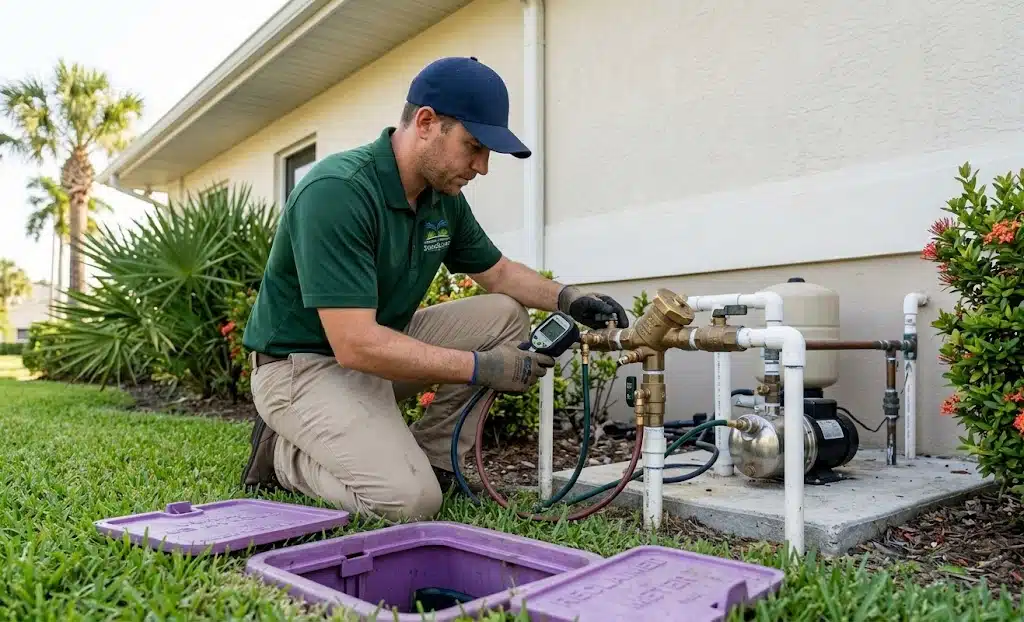
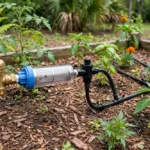
Backflow test gauge connected to an irrigation assembly beside a reclaimed water meter box in Port Orange

Irrigation Backflow Preventer Guide: Types & Costs (2026)

short design image

Your sprinkler heads sit in soil full of fertilizer, pesticides, and bacteria. A backflow preventer is the one device that stops that water from reversing into your home’s drinking water when pressure drops. In Florida, it’s not optional — it’s required on irrigation systems connected to the public water supply. Here’s which type your home needs, what testing and replacement cost, and the signs yours is failing.

What Is a Backflow Preventer — and Why Does Irrigation Need One?

Backflow is exactly what it sounds like: water flowing the wrong way. If city pressure suddenly drops — a water main break, firefighters opening a hydrant, a pump surge — the pressure in your irrigation lines can exceed the pressure in the supply line, and contaminated sprinkler water gets siphoned backward into the drinking water.


A backflow preventer is a valve assembly installed where your irrigation line branches off, with spring-loaded check valves (and on some types, an air vent) that slam shut the moment flow tries to reverse. It’s a core part of any safe system design — you’ll find it in the main component lineup in our guide to irrigation system components — and it’s the component your water utility cares about most.

The 4 Types of Irrigation Backflow Preventers

Four assemblies cover nearly every residential irrigation system. They differ in protection level, price, and whether Florida code still accepts them for new work.

The 4 Types, Explained

Start with the PVB — it’s what most Palm Coast homes already have.

1. Pressure Vacuum Breaker (PVB) — The Residential Standard

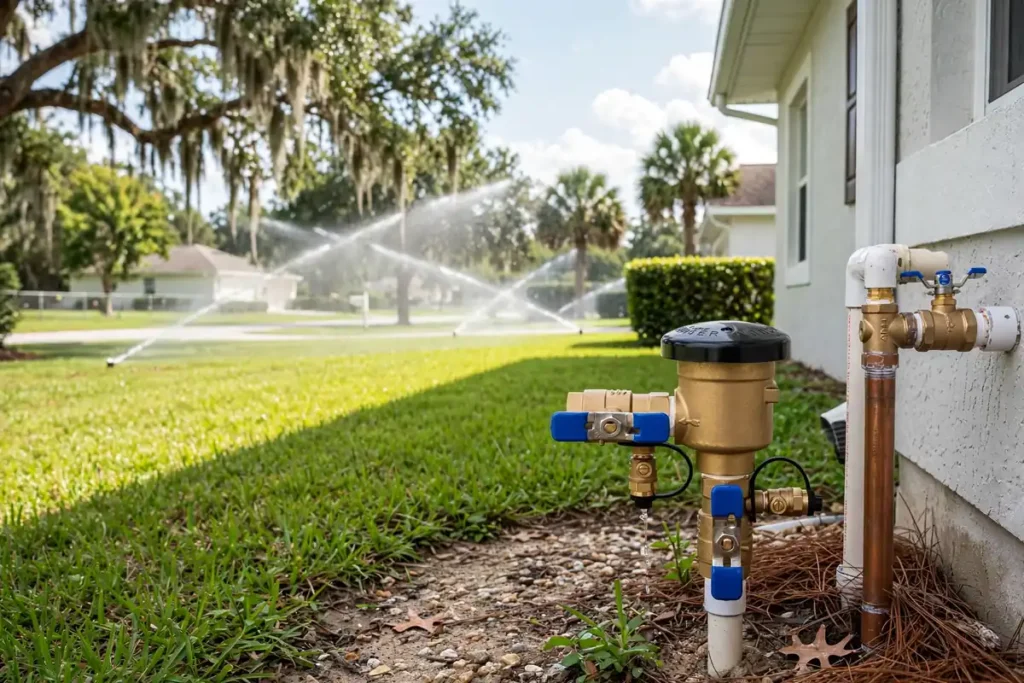
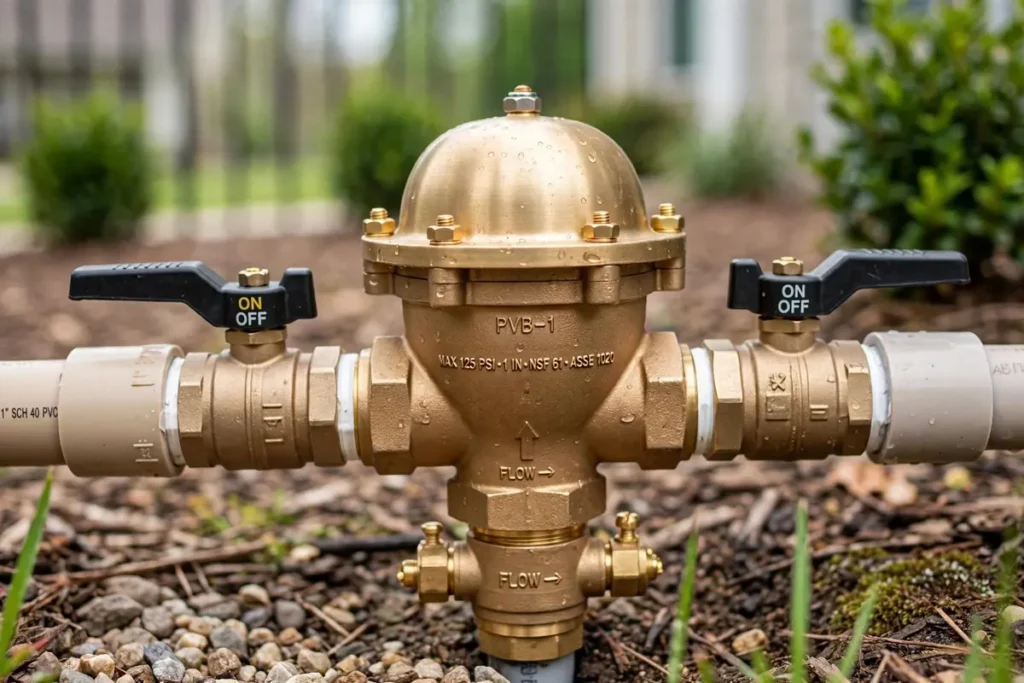
The PVB is the most common backflow preventer on Florida homes. You’ll recognize it as the brass assembly on a riser pipe near your meter or house wall, standing at least 12 inches above your highest sprinkler head. It protects against back-siphonage, is fully testable (it has test cocks for the certified gauge), and rebuild kits are cheap. Device cost: $50–$150. If your system has one device and it’s above ground with a bell-shaped top, it’s almost certainly a PVB.

2. Reduced Pressure Zone (RPZ) — Maximum Protection

The RPZ is the heavy-duty option: two check valves with a relief valve between them that dumps water if either check fails. That occasional discharge from the relief port is normal — it’s the device proving it works. Many Florida utilities now require an RPZ for new irrigation installations and retrofits because it protects against both back-siphonage and backpressure. Device cost: $250–$600. It costs more and needs more clearance, but it’s the last backflow preventer most homes will ever need to buy.

3. Double Check Valve Assembly (DCVA) — The Older Workhorse

A DCVA has two check valves and no vent. It’s testable and dependable for low-hazard connections, and thousands of older Florida systems have one buried in a valve box. The catch: many jurisdictions no longer accept a DCVA for new irrigation work, since irrigation is classed as a higher hazard (fertilizer and chemicals are in the water). Existing DCVAs are often grandfathered in until they fail a test — then replacement usually means upgrading to a PVB or RPZ. Device cost: $100–$250.

4. Atmospheric Vacuum Breaker (AVB) — Cheap, With Real Limits

The AVB is the small, inexpensive anti-siphon cap found on hose bibbs and some per-zone anti-siphon valves. It only works when it’s not under constant pressure, must sit 6+ inches above the highest head, and — critically — it cannot be tested. Because of those limits, most Florida water authorities won’t accept an AVB as the sole protection for a permanent irrigation system. Fine for a hose-end timer setup; not a substitute for a real assembly on your main line. Device cost: $10–$30.

Which Type Does Your Home Actually Need?

Work through it in this order: new system or replacement for a failed unit → follow your utility’s current rule (increasingly RPZ for new work in Florida). Existing system, passing tests → whatever you have — PVB, DCVA, or RPZ — can usually stay; keep it tested and maintained. Well or reclaimed water with a potable backup connection → RPZ, almost always. When in doubt, the device has to match the local cross-connection ordinance, not just a plumber’s preference — a failed inspection costs more than the price difference.

Backflow Preventer Costs at a Glance

ItemTypical CostNotes
Annual/biennial certified test$40–$90 per device15–30 minutes; results filed with your utility
PVB replacement (installed)$250–$450Most common residential job
RPZ replacement (installed)$450–$800Higher device cost + larger fittings
Rebuild kit (internal seals/checks)$25–$75 + laborOften restores a failing unit without full replacement
New installation during system install$300–$900Cheapest when bundled — see system cost guide

Ranges are typical for the Palm Coast / Flagler County area in 2026. Exact quotes depend on device size (¾” vs 1″), location, and whether the existing assembly can be rebuilt instead of replaced.

Florida Rules: Testing, Permits & Deadlines

Florida treats cross-connection control seriously, and irrigation is the #1 residential cross-connection. The statewide framework (Florida Administrative Code 62-555) requires backflow protection where irrigation connects to potable water, and your local utility sets the specifics.


In practice across Flagler County and most of Florida: a testable assembly (PVB, DCVA, or RPZ) is required on irrigation services; testing by a certified backflow tester is typically required every two years for residential devices (some utilities and commercial properties are annual); test results must be filed with the utility; and a failed device must be repaired or replaced and re-tested.


New installations also need the device type your utility currently approves — which is why so many replacements now land on RPZ. Ignore the test notice and you risk fines or, in stubborn cases, water service interruption. The test itself takes 15–30 minutes and doesn’t interrupt your day.

irrigation backflow preventer

What Happens During a Backflow Test (and If It Fails)

A certified tester connects a differential pressure gauge to the device’s test cocks, closes valves in sequence, and verifies each check valve holds the required pressure and the relief valve (on an RPZ) opens at the right point. You get a pass/fail report, and the tester files it with your utility. If it fails, the most common causes are worn rubber seals, debris in a check valve, or a tired spring — all fixable with a $25–$75 rebuild kit in most cases.


Full replacement is only needed when the body is cracked, corroded, or the model no longer meets code. One warning: a device that fails and can’t be rebuilt leaves your irrigation non-compliant until it’s replaced, so don’t sit on a failure notice. A failing preventer can also quietly rob your system of pressure — if your heads have gone weak, our low water pressure guide covers that diagnosis.

3 Signs Your Backflow Preventer Is Failing

Water Leaking or Gushing From the Device

A brief spit from an RPZ relief valve at startup is normal. Constant dripping, streaming from the PVB bell, or water gushing every time a zone runs is not — it means a check valve isn’t sealing, usually from debris, a split seal, or (after a cold snap) a cracked bonnet. Left alone it wastes water on every cycle and can mimic a bigger leak — if you’re hunting a mystery water loss, our leak detection guide walks through isolating it.

Low Pressure & Sputtering Heads

A check valve stuck half-closed starves everything downstream: heads pop up weakly, spray patterns shrink, and air sputters at zone start. Homeowners often blame the pump or the city supply when the real culprit is a $40 internal kit inside the preventer. If pressure dropped suddenly and the preventer is old, test it before you replace anything expensive.

Age, Corrosion & a Failed Test Notice

Brass bodies last decades, but internal rubber and springs don’t — most preventers need a rebuild every 5–7 years and full replacement somewhere in the 8–15 year range. Green corrosion, a device you can’t find parts for, or a failed-test letter from your utility are all end-of-life signals. Replacement is also the moment to confirm your new device matches current code, especially when planning other system work like adding zones.

Installation & Replacement: What to Expect

Replacement is a half-day job at most: water off, old assembly out, new device in at the correct height (12″+ above the highest head for PVB/RPZ), pressure test, and the initial certification test filed for you. Installed prices in the Palm Coast area run $250–$450 for a PVB and $450–$800 for an RPZ, including the device, fittings, and first test. Bundling the device into a new system installation ($300–$900 depending on type and size) is always cheaper than adding it later, because the trench and tie-in are already open. Get the test paperwork every time — your utility’s records are what prove compliance when you sell the home.

DIY or Certified Pro? What Florida Actually Allows

You can legally swap bonnet kits and clean debris on your own device — and handy homeowners do. But three things you cannot do yourself: perform the official compliance test (it requires a certified tester with a calibrated gauge), file test results with the utility, or install a new device type that changes your approved assembly. Practically speaking, a rebuild that isn’t followed by a passing certified test leaves you non-compliant on paper. Most homeowners land on the sensible split: leave testing, replacement, and filing to a certified pro, and save DIY for spotting the warning signs early.

Backflow Test Due — or a Device That's Leaking? We'll Handle It

Backflow compliance is one of those jobs that’s cheap when it’s routine and expensive when it’s ignored — failed-test fines, emergency replacements, and a device quietly draining your pressure for months.


Call (386) 237-2983 — we service irrigation systems across Palm Coast and Flagler County: certified backflow testing arrangements, rebuilds, and code-correct replacements (PVB and RPZ), with the paperwork filed properly. Free estimates, honest advice on repair vs replacement.

Frequently Asked Questions

Is a backflow preventer required for irrigation in Florida?

Yes. Where an irrigation system connects to the public (potable) water supply, Florida’s cross-connection rules require a testable backflow preventer, and your local utility enforces the specifics. Many Florida utilities now require an RPZ for new irrigation installations, while existing PVB and DCVA devices are typically allowed if they keep passing their tests.

How often does a backflow preventer need testing in Florida?

For most Florida residential irrigation devices, testing by a certified backflow tester is required every two years, with results filed with your water utility. Some utilities and all higher-hazard commercial connections are on an annual cycle — your utility’s test notice states your deadline.

How much does backflow preventer testing cost?

Typically $40–$90 per device in the Palm Coast area. The test takes 15–30 minutes, includes the pass/fail report, and the tester files the results with your utility. If the device fails, a rebuild kit ($25–$75 plus labor) fixes most units without full replacement.

What is the best backflow preventer for a home sprinkler system?

The PVB is the most common and cost-effective choice for homes and passes Florida requirements in most areas. The RPZ offers the highest protection and is increasingly required for new installations. The right choice is ultimately set by your utility’s current ordinance — a certified installer will confirm before quoting.

Why is my backflow preventer leaking water?

A brief discharge from an RPZ relief valve at startup is normal operation. Constant leaking usually means a check valve isn’t sealing — debris, a worn seal, or freeze damage to the bonnet are the top causes. Most cases are fixed with an inexpensive rebuild kit; a cracked body means replacement.

How long does an irrigation backflow preventer last?

Expect 8–15 years of service. The brass body can last far longer; it’s the internal seals and springs that age, which is why a rebuild every 5–7 years keeps most units passing. Regular testing catches wear early, before it becomes a failed-test deadline problem.

Facebook
X
WhatsApp