“How many zones do I need?” is the first question in every irrigation design — and the answer is never just a number. It’s a calculation. Too few zones and your water supply can’t keep up: heads dribble, corners go brown, and your pump strains. Too many and you’ve paid for valves, wire, and pipe you didn’t need. Here’s how to figure out the right number for your yard, using the same math the pros use.
What Is an Irrigation Zone, Exactly?
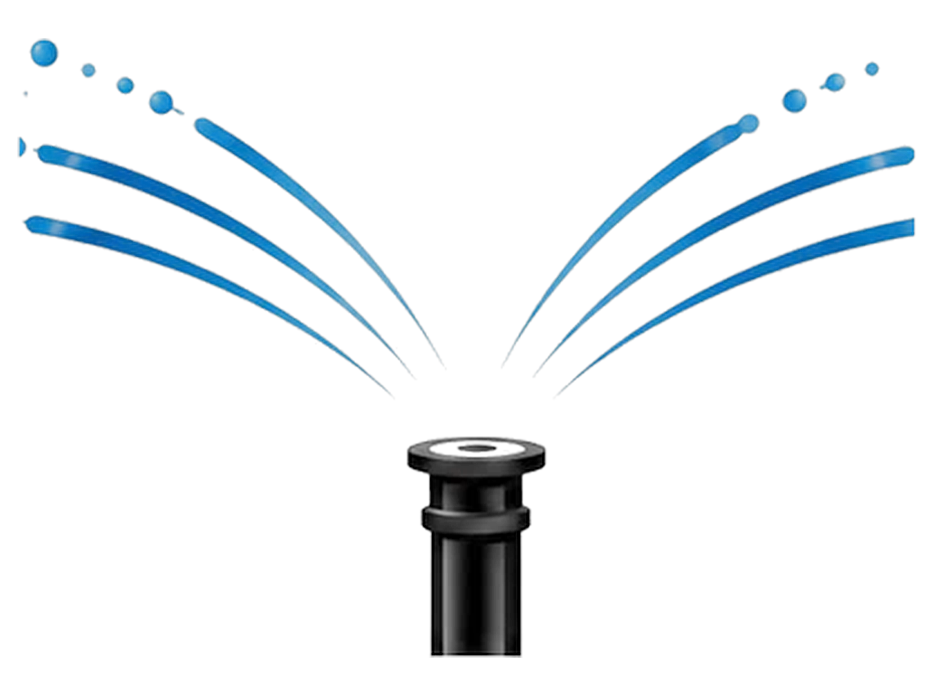
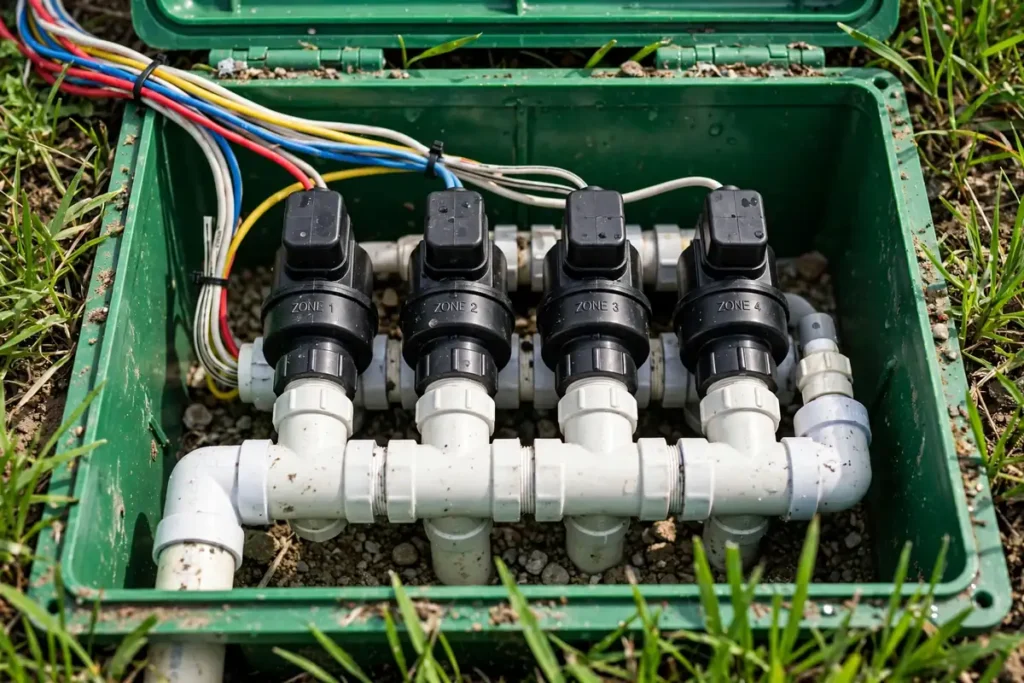
A zone is a group of sprinkler heads controlled by a single valve, and zones run one at a time. Your controller opens Zone 1, waters it, closes it, then moves to Zone 2. Why not run everything at once? Because your water source can only supply so many gallons per minute. A typical Palm Coast home on city water delivers 8–12 GPM — and a single rotor head can use 2–4 GPM. Four rotors can max out your entire supply. Zones split the demand so every head gets full pressure, every time. Each zone has its own valve and wiring, which is why zone count drives both performance and price.
The 5 Factors That Decide Your Zone Count
There’s no universal number — but there is a universal formula. These five factors determine how many zones your yard actually needs.
The 5 Factors, Explained
Work through these in order — each one narrows the number.
1. Your Water Pressure & Flow Rate (GPM)
This is the hard limit everything else obeys. Your available flow — measured in gallons per minute — decides how many heads can run at once. A standard bucket test (time how long it takes to fill a 5-gallon bucket from an outdoor spigot) gives you the number. The pro rule: keep each zone’s total demand under 80% of your available GPM, leaving headroom for pressure drops. If your supply is weak to begin with, you’ll need more zones, not fewer — see how to diagnose low pressure before you design anything.
2. Yard Size & Shape
Bigger yards need more zones — but shape matters just as much. A square 5,000 sq ft lawn might run fine on 3 zones; an L-shaped 5,000 sq ft lawn with a side strip could need 5, because narrow strips and odd corners each need dedicated coverage. As a rough starting point: under 5,000 sq ft of turf usually needs 3–4 zones, 5,000–10,000 sq ft needs 4–6, and anything over 10,000 sq ft typically needs 6–10.
3. Plant Types: Turf, Beds & Drip Get Their Own Zones
Lawn, flower beds, shrubs, and drip-irrigated areas must be zoned separately — they drink at completely different rates. St. Augustine turf wants deep, infrequent soaking; flower beds want gentle, frequent watering; drip lines deliver tiny amounts right to roots. Put them on one zone and something always suffers. Never mix spray heads and drip emitters on the same zone — the heads will drown the beds or the beds will starve. Our sprinkler vs drip comparison explains why each needs its own schedule.
4. Head Types & Precipitation Rates
Rotors throw water far and slow — ideal for big lawns. Sprays cover small areas fast — ideal for narrow strips and beds. The catch: they apply water at wildly different rates (rotors ~0.4 in/hr, sprays ~1.5 in/hr). Mix them on one zone and the spray areas flood while rotor areas stay thirsty. The rule is simple: one head type per zone, with head-to-head coverage so every inch gets watered from two directions.
5. Slope, Sun & Soil: The Florida Extras
Palm Coast yards add three wrinkles. Sandy soil drains fast, so zones need shorter, more frequent cycles than clay-soil designs assume. Slopes shed water downhill — they need their own zone with cycle-and-soak programming or the bottom drowns while the top dries. Full-sun St. Augustine drinks noticeably more than shaded beds, so sunny and shady areas shouldn’t share a zone. Ignore these and even a correctly counted system underperforms.
Quick Reference: Zones by Yard Size
Turf Area
Typical Zones (Turf Only)
Add
Under 5,000 sq ft
3–4
+1 per bed/drip area
5,000–10,000 sq ft
4–6
+1 per bed/drip area
10,000–20,000 sq ft
6–10
+1–2 per bed/drip area
Over 20,000 sq ft (½ acre+)
8–12+
Design review recommended
These are starting points — your GPM is the final word. A big yard on a weak well can need more zones than a smaller yard on strong city pressure.
The Simple Math: Calculate Your Zones
Here’s the actual calculation, step by step:
Step 1 — Measure available GPM. Bucket test at an outdoor spigot: 5 gallons ÷ seconds to fill × 60 = GPM. Do it twice and take the lower number.
Step 2 — Add up head demand per area. Check manufacturer specs: a typical rotor uses 2–4 GPM, a spray head 1–2 GPM, a drip emitter 0.5–2 GPH (that’s per hour — far less). Total the heads covering one area.
Step 3 — Divide and round up. Area demand ÷ (available GPM × 0.8) = zones for that area. Example: your front lawn’s heads total 24 GPM, and you have 10 GPM available → 24 ÷ 8 = 3 zones. Repeat for each area, keeping plant types and head types separate.
If the math feels fiddly, that’s normal — it’s the part most DIY designs get wrong, and the reason pros still earn their fee on design alone.
Why Florida Yards Often Need More Zones
Three Florida realities push zone counts up. First, reclaimed water — common in Palm Coast subdivisions — often arrives at lower pressure than potable city water, so each zone covers less. Second, year-round watering means systems cycle roughly twice as often as northern designs assume; undersized zones show their weakness faster here. Third, St. Augustine’s thirst in full summer sun is real — many Florida lawns need a dedicated high-output turf zone plus separate, gentler bed zones, where a northern yard might combine them. When in doubt, add the zone now: retrofitting one later costs roughly double.
3 Signs You Have Too Few Zones
Brown Spots Despite Long Run Times
The classic symptom. You keep increasing run times, but the same patches stay brown. The problem isn’t duration — it’s delivery. Too many heads are sharing too little water, so none of them get enough pressure to throw properly. Adding a zone (splitting the load) fixes what longer watering never will.
Weak Streams & Uneven Coverage
Heads that barely pop up, spray that falls short, one side of the yard lush while the other struggles — all point to a zone carrying more heads than its GPM allows. Every head on an overloaded zone performs worse, so the whole zone looks sick, not just one head. This is also how pumps get overworked on well systems: constant high demand shortens pump life.
One Area Soggy, Another Bone Dry
When turf and beds share a zone, the schedule that suits one drowns or starves the other. Soggy mulch beds next to thirsty lawn — or a swampy low corner beside a crispy slope — means areas with different needs were lumped together. The fix is separation: give each plant type and micro-climate its own zone and its own schedule.
What an Extra Zone Costs in Palm Coast
During a new installation, each additional zone typically adds $150–$300 (one valve, wire, pipe, and heads). Retrofitting a zone into an existing system runs $300–$600+ — trenching through an established lawn, tying into the mainline, and possibly upgrading the controller all add labor. If your controller is already maxed out on stations, factor in a controller upgrade too. For full installation pricing, see our sprinkler system cost guide. The cheapest zone is always the one you include in the original design.
When to Call a Pro Instead of Guessing
Counting zones for a brand-new system? A pro design pays for itself — hydraulic calculations, head placement, and controller programming are easy to get subtly wrong and expensive to fix. Expanding an existing system? You need to verify controller station capacity, available GPM at the tie-in point, and sometimes a permit. If any of that sounds like guesswork, it probably is — and guesswork is how yards end up with the brown spots described above.
Not Sure How Many Zones Your Yard Needs? We'll Design It Right
Zone math looks simple until it’s your yard, your water pressure, and your money on the line. Get it wrong and you’re either underwatering half the lawn or paying to retrofit zones you should have had from day one.
Call (386) 237-2983 — we design irrigation systems across Palm Coast and Flagler County: GPM testing, zone layout, head selection, and controller programming, all sized to your property. Free estimates, honest zone counts, no overselling.
Frequently Asked Questions
How many irrigation zones does the average house need?
Most suburban homes need 4–8 zones: typically 3–6 for turf plus 1–2 for beds and drip areas. The exact number depends on your water flow rate (GPM), yard size and shape, plant types, and sprinkler head types — not just square footage.
Can I add a zone to my existing sprinkler system?
Yes, if your controller has a free station and your water supply has spare GPM. Retrofitting typically costs $300–$600+ in the Palm Coast area — roughly double what the zone would have cost during original installation, because of trenching through established lawn.
How many sprinkler heads can go on one zone?
As many as your GPM allows. Total the GPM of all heads on the zone and keep it under 80% of your available flow. In practice that’s often 4–6 rotor heads or 8–12 spray heads per zone on typical residential water supply — but always do the math for your specific pressure.
Do flower beds need separate zones from the lawn?
Yes. Beds and turf have completely different water needs, and drip emitters can’t share a zone with spray heads. Combining them means one always suffers — soggy beds or thirsty grass. Separate zones with separate schedules is the correct design.
How many irrigation zones per acre?
Roughly 8–12 zones per acre for turf, plus additional zones for beds, drip areas, and micro-climates. Large properties also need to account for pressure loss over long pipe runs, which can push the count higher.
What happens if my system has too few zones?
Brown spots that don’t respond to longer watering, weak head performance, uneven coverage, and — on well systems — accelerated pump wear from constant high demand. The fix is splitting overloaded zones, not running the system longer.