⭐⭐⭐⭐⭐930+ Happy Customer Reviews

Every old sprinkler system reaches the same awkward season: a valve in spring, two heads in summer, a controller that forgets its schedule by fall. Each repair is small. Together they raise the question nobody wants to guess at — keep fixing it, or replace the whole thing? Age alone can’t answer that; evidence can, and you can gather most of it in one walk around the yard. Below: the five tests that settle it, what each path typically costs around Palm Coast (full breakdowns live in our sprinkler repair cost guide and sprinkler system cost guide), and the third option — a partial upgrade — that most sales pitches skip.
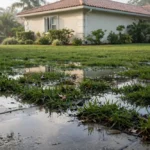
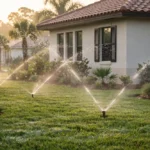
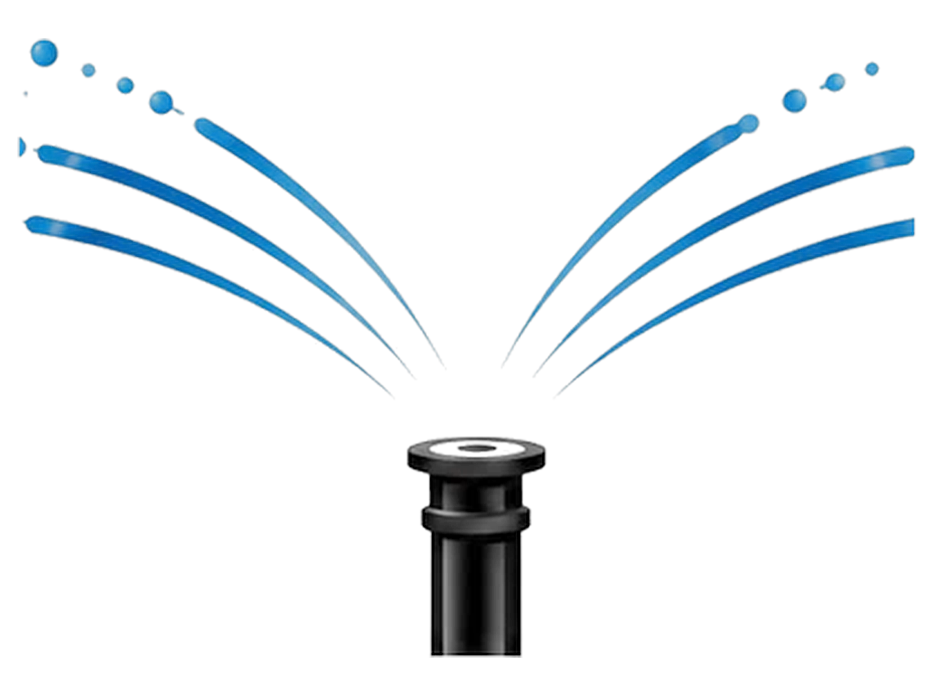
Run each zone from the controller for two or three minutes, and walk it with your phone’s notes app open. Look for five things: heads that won’t pop up or spray sideways; misting or fogging at the nozzles (water escaping as vapor instead of landing); soggy spots or water bubbling up between heads; dry arcs that never get wet; and zones that start late, run weak, or won’t shut off.
Note which zone each problem lives in — that list feeds every test below: six notes in one zone means a zone problem, notes in every zone a system problem. Short test runs are allowed on non-watering days under SJRWMD rules precisely for checks like this. New to the parts? Our irrigation system components guide names everything in the valve box.
Strip away the salesmanship and repair-or-replace reduces to three questions: how old is the system, what exactly is failing, and what is the money doing? The five tests below make those questions measurable. Score your audit notes against each one.
No single test decides it. When two or more point the same way, that’s your answer; when they disagree, the anatomy test (Test 3) breaks the tie.
Buried PVC pipe doesn’t expire on a schedule — sound pipe can serve 30 years or more. What ages out is everything attached to it: pop-up heads last roughly 10–15 years before seals leak and gears strip, valves about the same, solenoids 5–10, controllers 10–15. Read your system’s age in layers. Under 10 years, almost everything is in its first life — repair without a second thought.
Between 12 and 15, components start failing in sequence; that’s normal wear, not a fatal diagnosis. Past 15–20, check whether parts for your controller and heads are still made — discontinued parts turn simple repairs into scavenger hunts. One Florida wrinkle: yours runs 12 months a year while a northern system sits drained for five — roughly double the wear cycles.
A single broken head, one dead valve, a solenoid that quit: that’s maintenance — every system of every age needs it. What condemns a system is repetition. Keep a simple log — date, zone, what failed, what it cost. Two patterns matter: two or more service calls in a single season, and the same class of failure returning in different zones — a valve this spring, another this fall. The second means that whole generation of parts is reaching end-of-life together, and you’ll buy them one emergency call at a time, at emergency-call prices. At three separate repair calls in a year, stop guessing and get a replacement quote to compare against the stack.
This test separates a tired system from a dying one. Heads, nozzles, valves, and solenoids are parts: each unbolts or unscrews and swaps in under an hour, and a system whose failures all live on that list is worth repairing at almost any age. A dead solenoid, for instance, is a $10–$25 part and a 10-minute job — our solenoid replacement guide walks through it.
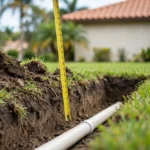
The skeleton is different: the mainline under constant pressure, the lateral pipes, the fittings, the wire run. Skeleton failures look like pipe breaks in different places, pressure sagging across every zone at once, joints that keep separating, wire faults that move around. Component failures say repair. Skeleton failures in more than one place say you’re re-buying the system anyway, one excavation at a time.
Get both numbers first: a written quote for this repair, and a replacement figure for your lot. Around Palm Coast, a new system on a typical quarter-acre runs about $2,800–$6,500, so half of replacement is roughly $1,400–$3,250. The rule: when a single repair quote approaches half the cost of a new system — a full mainline re-pipe can get there — replacement usually wins, because it resets every clock at once while the repair resets one.
The quieter trap is stacking: add up 12 months of repair bills; at a third or more of replacement cost on a system past 15 years, you’re financing a new system in installments without ever getting one. What matters is that both numbers on the page are yours, not a guide’s.
An old system can run ‘fine’ and still waste a third of what it pumps. Worn nozzles throw distorted patterns, tired seals weep at every head, and the mist from your audit is water leaving as vapor. Compare your summer bills year over year on the same schedule: a steady climb with unchanged habits is the system confessing.
One exception — a bill that jumps in a single month is a buried leak until proven otherwise, so rule that out first with the meter check in our leak detection guide. This is also the one test that can argue for upgrading a healthy system: weather-based smart controllers are commonly credited with cutting outdoor water use by 20–30%, and under Palm Coast’s one-watering-day-a-week rules, driveway water on your day is gone for the week.
| Path | Typical Cost | Notes |
|---|---|---|
| Keep repairing (per call) | $15–$510 per visit | Head $15–$40 · valve $150–$400 · controller/wiring $105–$510 |
| Pipe or leak repair | $150–$2,500 | Depends on depth and location; repeated breaks change the math (Test 3) |
| Partial upgrade | $150–$600 + parts | Smart controller $150–$600 installed, plus heads/valves only where they’re failing |
| Full replacement (quarter-acre) | $2,800–$6,500 | Roughly $800–$1,100 per zone installed; resets every component clock at once |
Typical 2026 ranges for the Palm Coast / Flagler County area, consistent with this site’s repair cost and system cost guides. The numbers for your yard come from an actual evaluation, not a table.
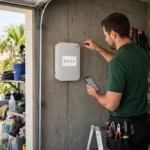
Most repair-or-replace advice pretends there are two doors. There are three. If the anatomy test says your pipes and wire are sound but the components are a generation old, the smart money is a partial upgrade: a weather-based smart controller ($150–$600 installed) that skips watering when it rains and adjusts by season, pressure-regulated heads in the zones that mist, and new valves only where the old ones fail.
That captures most of a new system’s water savings — the controller and heads are where the waste lives — for a fraction of replacement cost, and the buried skeleton you already paid for keeps working. But new components on bad pipe waste the money: a smart controller cannot fix a cracked mainline, and fresh heads on undersized pipe still spray weak. Earn this path by passing the anatomy test, not by hoping for it.

Replacement gets recommended too easily in this industry, so here is the case for repair, plainly. Repair when the system is under 12–15 years old and the failure is one thing, in one zone, on the parts list. Repair when the pipes pass the anatomy test — no breaks, steady pressure, wiring intact — whatever the calendar says: a 20-year-old system with sound pipe and two tired valves needs two valves, not a funeral.
Repair when the part is still stocked, the lawn is growing well under the current coverage, and the bill is a small fraction of replacement. Age alone never condemns a system; failure patterns do. If your audit notes are short and specific, you have a repair — and anyone who tells you otherwise should have to name which test your system failed.
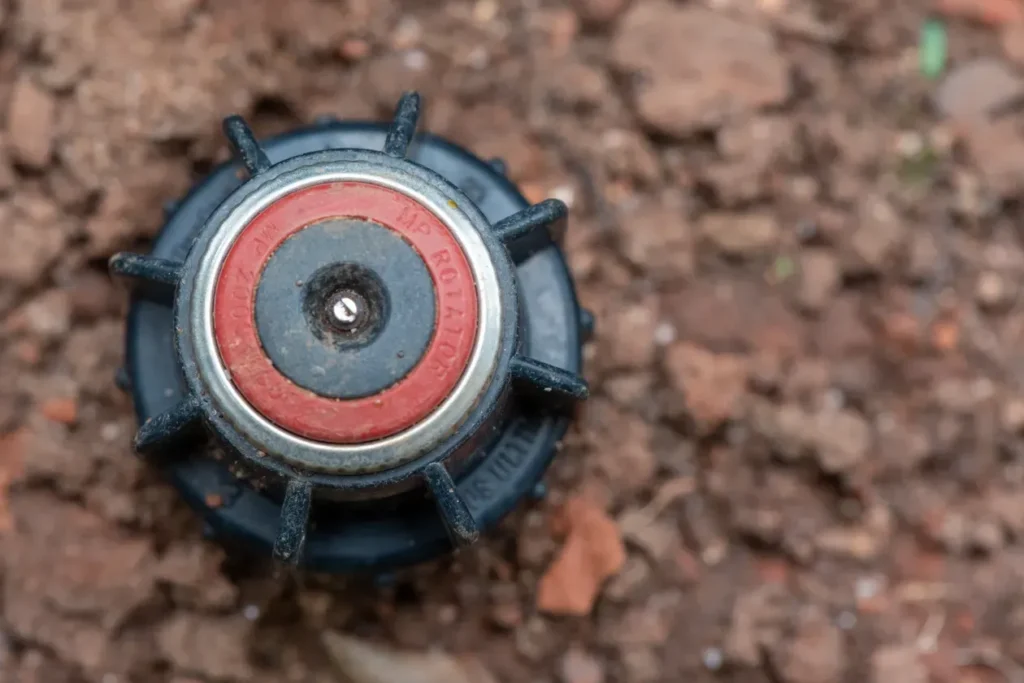
Palm Coast soil is sand, and sand moves. Over 20 years it settles around buried pipe, roots shoulder joints aside, and heads tilt a degree at a time until coverage falls apart. The local pattern: a well-built system slowly spraying wrong, with an occasional joint failure where the ground shifted most. That’s repairable — realign heads, re-seat a joint — until breaks appear in multiple runs of pipe. Count breaks by location, not just by year: the same spot twice is a soil problem there; five spots once each is a pipe problem everywhere.
A nearby strike can take out the controller, cook several solenoids at once, and leave four zones dead by morning — which feels exactly like a system that died of old age. It isn’t. Lightning damage is an electrical event with a parts list: the controller, the solenoids that took the surge, occasionally a stretch of wire.
All of it sits on the repairable side of the anatomy test, and a controller surge protector is cheap insurance in one of the most lightning-prone counties in the country. If your system ‘suddenly died’ the morning after a storm, have it diagnosed as an electrical failure before anyone quotes you a new one.
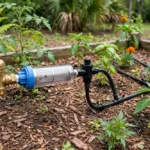
Plenty of Palm Coast systems run on shallow wells, and well water leaves evidence: orange iron stains on fences and sidewalks, grit in the nozzle filters, a sulfur smell at startup. The stains are cosmetic, not structural. The grit is the real issue: sand and sediment chew head seals and clog nozzles, so well systems wear heads faster and need filters cleaned on a schedule. Neither condemns the pipes. And if a well system loses pressure everywhere, work the suspect list in order — pump, filter, then pipes — because the first two cause that symptom far more often than the third.
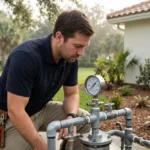
A real evaluation produces evidence, not a verdict with a price attached. It should include running every zone and watching each head; a pressure reading (low everywhere = mainline or supply; low in one zone = that zone’s valve or line); opening valve boxes to check wiring and standing water; testing the controller’s output station by station; and a straight answer on which of the five tests your system passes and fails.
If the recommendation is replacement, you should hear which skeleton problems justify it, in which zones — not a speech about age. If it’s repair, you should hear the next likely failure and its cost, so the next call is a plan, not a surprise.
Under 12 years old — or any age with sound pipes and one isolated failure — repair it, without drama. Past 15, with the pattern and anatomy tests both pointing at pipe and wire: get the replacement quote; patching has become the expensive option in a cheap disguise. Sound pipes under tired components: upgrade the components, keep the skeleton. And start the log today — date, zone, failure, cost. The system will ask this question again; next time you’ll answer it in one visit.
We evaluate sprinkler systems across Palm Coast and Flagler County the same way this guide does — zone by zone, test by test — and we’ll tell you when the honest answer is ‘just repair it.’
Call (386) 237-2983 for a system evaluation: full zone audit, pressure and wiring checks, and both numbers in writing. Sprinkler repair, partial upgrades, and full system replacement — whichever yours actually needs.
The buried system as a whole has a practical life of about 15–20 years, but it ages in layers: solenoids typically last 5–10 years, heads and valves 10–15, controllers 10–15, while sound PVC pipe can serve 30 years or more. Florida systems wear faster than northern ones because they run year-round — roughly double the on-off cycles. Most systems aren’t replaced because one part died of old age; they’re replaced when failures spread from parts to pipes and wiring.
If a single repair quote approaches half the cost of a comparable new system, replacement usually makes more sense. On a typical Palm Coast quarter-acre, a new system runs $2,800–$6,500, so the danger zone for a single repair is roughly $1,400–$3,250 — a full mainline re-pipe can reach it. The same logic applies to stacking: if a year’s worth of smaller repairs adds up to a third or more of replacement cost on a system past 15 years, you’re paying for a new system in installments without getting one.
Most quarter-acre homes land between $2,800 and $6,500 installed, which works out to roughly $800–$1,100 per zone including valve, wire, pipe, heads, and labor. Small front-yard-only systems start closer to $1,800; half-acre properties typically pass $6,000. Our sprinkler system cost guide breaks down what moves the number up or down for Flagler County lots.
Yes — if the buried pipe and wiring are sound. The highest-value partial upgrade is a weather-based smart controller ($150–$600 installed), followed by pressure-regulated heads in zones that mist and new valves only where old ones are failing. That combination captures most of a new system’s water savings for a fraction of replacement cost. What a partial upgrade can’t do is fix cracked, undersized, or corroded pipe — if the skeleton is failing, upgrades on top of it are money spent twice.
No. A working system doesn’t owe anyone a replacement, and age by itself never condemns one. Keep repairing isolated failures as they come, start a simple log of what fails and what it costs, and run the zone audit once a season. The answer changes when the pattern does — repeat failures in the same season, breaks showing up in different runs of pipe, or a repair quote that approaches half of replacement cost. Until then, the honest move is maintenance, not a new system.
Watch for breaks or leaks appearing in different places rather than the same spot twice, pressure that sags across all zones at once, joints that keep separating, perpetually soggy patches with no head nearby, and — on well systems — sand or grit repeatedly clogging heads (though that usually indicts the well filter first). One break is an accident; breaks in multiple runs are the pipe telling you its age. A pressure test and a meter check for hidden leaks, covered in our leak detection guide, confirm it before you commit to either path.