⭐⭐⭐⭐⭐930+ Happy Customer Reviews
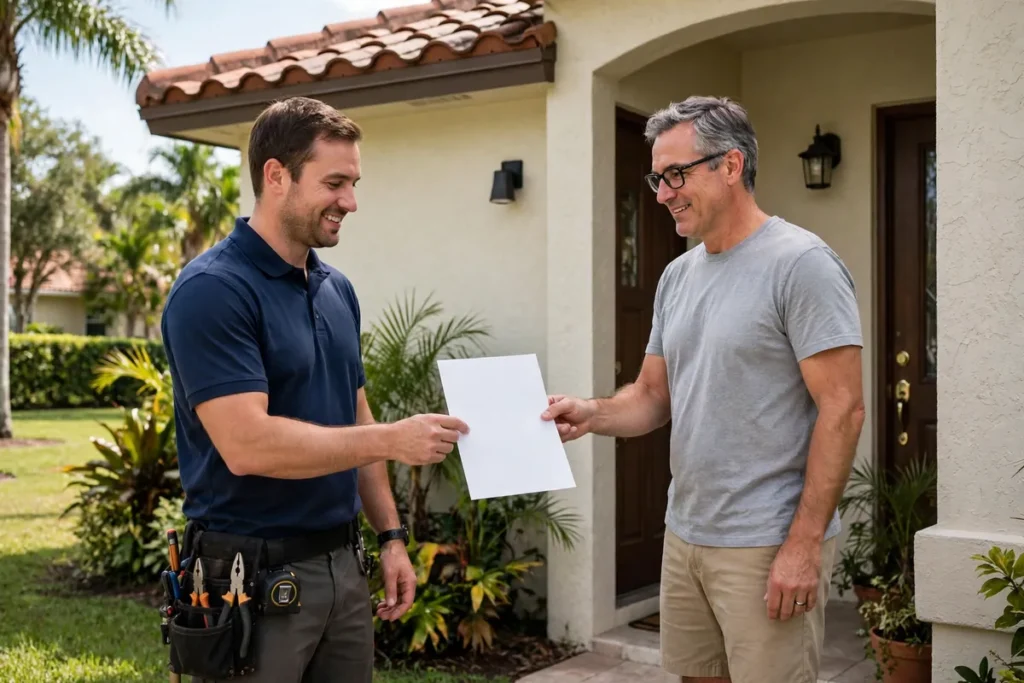
Florida offers a statewide certified irrigation specialty contractor license through the Construction Industry Licensing Board, and counties have also issued local licenses. In Flagler County, new contractors now need state certification. Before hiring, look up the license on DBPR and ask for proof of liability and workers’ comp insurance.
Key takeaways:
Two systems overlap in Florida, and that overlap is why hiring feels confusing. At state level, the Construction Industry Licensing Board (CILB), part of the Department of Business and Professional Regulation (DBPR), issues a certified irrigation specialty contractor license valid statewide. Counties have also issued their own local certificates of competency. The DBPR position, in its Construction Industry FAQ, is that the statewide certified license does not by itself create a mandatory statewide requirement: it is an alternative to a local certificate, and it lets the holder work in any Florida jurisdiction.
For a homeowner, the practical question is simpler: is this company licensed somewhere you can check, and does that license cover the work? Every page on this site says “Licensed & Insured” — a claim you can test, not a substitute for checking. Our About page tells you who we are; this guide tells you how to verify any company, including us.
Flagler County has listed an “irrigation sprinkler specialty contractor” as a local Class II license. After March 31, 2026, the County stopped issuing new local contractor licenses and requires state certification (or reciprocity) for anyone without a current local license. In plain terms: a contractor starting out in Flagler County today cannot get a brand-new local license — the route in is state certification.
That matters on an old quote or website: a long-held Flagler local license differs from a new company’s claim to one it could not have obtained this year. Either way, confirm what it actually holds today. Well work follows a separate permit track — our well vs city water guide explains the DOH-Flagler permit side.
An irrigation specialty license covers work downstream of the backflow preventer or meter: controller, valves, lines and heads. The potable tie-in — the connection to drinking water — and backflow work follow the Florida Plumbing Code, and whether a plumber is needed can depend on the local official. Know that boundary before anyone touches your drinking-water line.
Backflow testing is its own job: Florida requires certified backflow testers. A company that installs your system is not automatically the right party to test it. Our backflow preventer guide explains what the device does and why its placement matters.
You do not need the contractor’s paperwork to start. The DBPR license search at myfloridalicense.com lets you search by company name or license number. Work through it in this order, and write down what you find before the sales visit ends.
Three minutes here saves the argument later: a license dispute found after the trenches are dug is about work already buried. Keep a note of the DBPR result with the quote.
State licensing requires proof of workers’ compensation and general liability insurance. Ask for the certificate itself, not a verbal assurance, and read three things on it: the company name (it must match the quote), the coverage types, and the dates (the policy must cover your job dates, not last year’s).
Workers’ comp covers a worker hurt on your property; general liability covers damage to it. A licensed company with no current insurance has only done half the job. If a contractor will not produce a certificate, treat that like a missing license number: get another quote.
A license is not just a card; it carries duties on every job. Licensed contractors must test the rain or soil-moisture sensor on systems they work on and fix it if it is missing or broken — that duty comes from Florida Statute 373.62. They must also use certified testers for backflow work and pull permits where the job requires one.
Skipped duties show up later: a system watering through rain, an untested backflow assembly, or a missing permit surfacing when you sell. Our backflow testing page explains what a proper test covers.
Walk away — or at least get a second quote — if you see any of these: no license number on the quote or website; cash-only terms with no written scope; no insurance certificate on request; a claim that “we don’t need a permit” for work that plainly needs one; pressure to sign today for a price that expires tonight. None of these proves a company will do bad work, but each removes a protection you would otherwise have if something goes wrong.
Price alone is the weakest signal. A quote far below the others often means a skipped step — no permit, no backflow test, no sensor check — rather than a better deal. Compare quotes on scope first: zones, heads, controller, sensor, testing and permits named in writing. Our sprinkler system cost guide shows what those line items usually look like, so a missing one stands out.
Ask these before you sign, and write the answers on the quote itself: What is your license number, and can I look it up on DBPR right now? Will you send me your workers’ comp and general liability certificates? Who will actually do the work — your crew or a subcontractor? Which permits does this job need, and are they included in the price? Who tests the backflow assembly, and is that tester certified? Will you check the rain sensor, and what happens if it is missing or broken? What warranty covers the work, and for how long?
A good contractor answers all seven — every one is a normal part of a licensed job. If an answer is vague (“we handle all that”, with no names, numbers or paperwork), ask again, in writing. Our automation guide covers how sensors and smart controllers should work together, so you will know whether the answer matches the system you own.
Palm Coast adds its own layer, and its source must be stated honestly: the rules below come from the City of Palm Coast’s building handouts, dated 2009–2010. They are the City’s stated requirements in those documents — not a statement of current law — so confirm them with the Building Department before relying on them.
| Rule (according to the City’s building handouts) | Detail |
|---|---|
| Who may install or alter irrigation | Licensed through the Flagler County contractor licensing program, plus a City of Palm Coast business tax receipt. |
| New homes | Can be included in the building permit when a licensed irrigation contractor is named; commercial new construction needs a separate irrigation permit. |
| Re-sodding | $40 re-sod permit for more than one pallet (400 sq ft); St. Augustine or zoysia requires an automatic underground sprinkler system. |
| Homeowner work | City’s re-sod sheet: only licensed contractors may install or adjust irrigation. Florida’s owner-builder exemption lets owners act as their own contractor on their own one- or two-family home, with a signed disclosure, personal supervision, and no sale or lease within one year. |
That last row is where homeowners most often get tripped up: the handout and the state exemption point in different directions. Before a DIY install, call the City of Palm Coast Building Department and ask which rule applies to your home. New-home irrigation is usually part of the building permit with a licensed irrigation contractor named — our installation page explains what a licensed install normally includes.
License on DBPR: active, in the company’s name, covering irrigation. Insurance: workers’ comp and general liability, current, matching the quote. Permits: named on the quote, pulled where required. If any one fails, the rest of the quote does not rescue it.
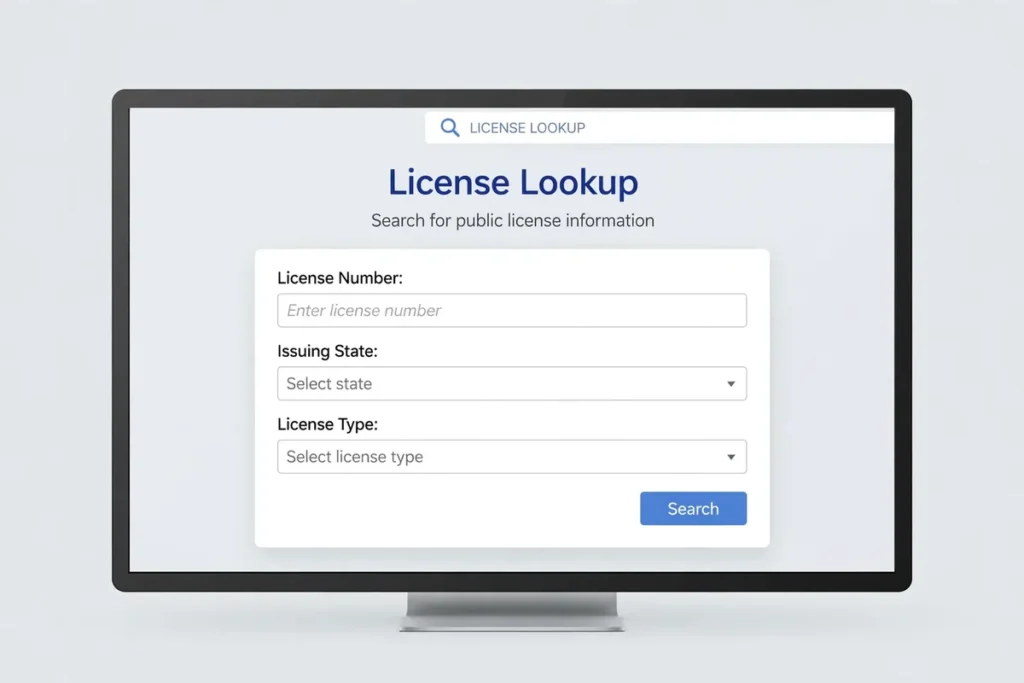
Do not argue, and do not pay a deposit while the question is open. Ask, in writing, for the license number and the name under which it is held, and allow one business day to produce it. If the DBPR search still shows nothing, or the name does not match the quote, get a second quote from a verifiable company. A verbal assurance is not a check.
“Certified” means the statewide CILB license; “local” means a county certificate. In Flagler County, new local licenses stopped after March 31, 2026, so a new contractor’s route is state certification. Either can be legitimate — what matters is that the claim can be verified today.
A license says the state or county vetted the contractor’s competence. Insurance says someone pays if a worker is hurt or property is damaged. One does not imply the other — check both, separately, every time.
A permit authorises a specific job; a license authorises a contractor to do that kind of work. A licensed contractor skipping a required permit, and an unlicensed person holding a permit, are both problems.
An irrigation system is buried work. Once trenches are closed, you cannot see whether the right pipe, backflow device or sensor went in — only whether the lawn stays green. License and insurance checks are the one part you can verify before a shovel hits the ground. Do them every time, even with a neighbour-recommended company.
Get three quotes, check all three licenses on DBPR, read all three insurance certificates, then compare prices on matching scopes. The cheapest quote from an unverified company is not a saving; it is an unpriced risk.
Ask any irrigation contractor, including us, for a license number and insurance certificate before work starts, then check it on DBPR. That test applies to us as to anyone else.
Call (386) 237-2983 and ask for our license number and insurance certificate. Irrigation & Sprinkler by DreamScapes has served the area since 2015, with 930+ customers, from 15 Hargrove Ln, Unit 5D, Palm Coast, FL 32137. We respond within 24–48 hours. This site describes us as “Licensed & Insured” — verify that wording the same way, for any contractor.
Florida offers a statewide certified irrigation specialty contractor license through the Construction Industry Licensing Board, and counties have also issued local licenses. DBPR describes the statewide certified license as an alternative to a local certificate, not a mandatory statewide requirement on its own. In Flagler County, new contractors now need state certification, since the County stopped issuing new local licenses after March 31, 2026. Before hiring, verify the license on DBPR rather than trusting a claim on a quote.
Search by company name or license number on the DBPR license search at myfloridalicense.com. Confirm the license is active, that it covers irrigation work, and that the holder matches the company on your quote. Check for any discipline on the record, and keep a note or screenshot of the result with the quote.
Ask for proof of workers’ compensation and general liability insurance — both are required for state licensing. Read the certificate itself: the company name must match the quote, both coverage types must be listed, and the policy dates must cover your job.
An irrigation license covers work downstream of the backflow preventer or meter. The potable tie-in and backflow work follow the Florida Plumbing Code and may need a plumber depending on the local official. Backflow testing itself must be done by certified testers.
According to the City’s building handouts (dated 2009–2010, not stated here as current law): irrigation on a new home is usually covered by the building permit with a licensed irrigation contractor named, and laying more than 400 sq ft of sod needs a $40 re-sod permit. If St. Augustine or zoysia is laid, an automatic underground sprinkler system must be installed. Confirm these requirements with the City of Palm Coast Building Department before relying on them.
State law allows owner-builders on their own home, but the City’s handout says only licensed contractors may install or adjust irrigation, so call the City of Palm Coast Building Department before a DIY install. Under Florida’s owner-builder exemption, owners may act as their own contractor on their own one- or two-family home with a signed disclosure, personal supervision, and no sale or lease within one year — but the City’s stated position differs, so confirm which rule applies to your home first.