⭐⭐⭐⭐⭐930+ Happy Customer Reviews
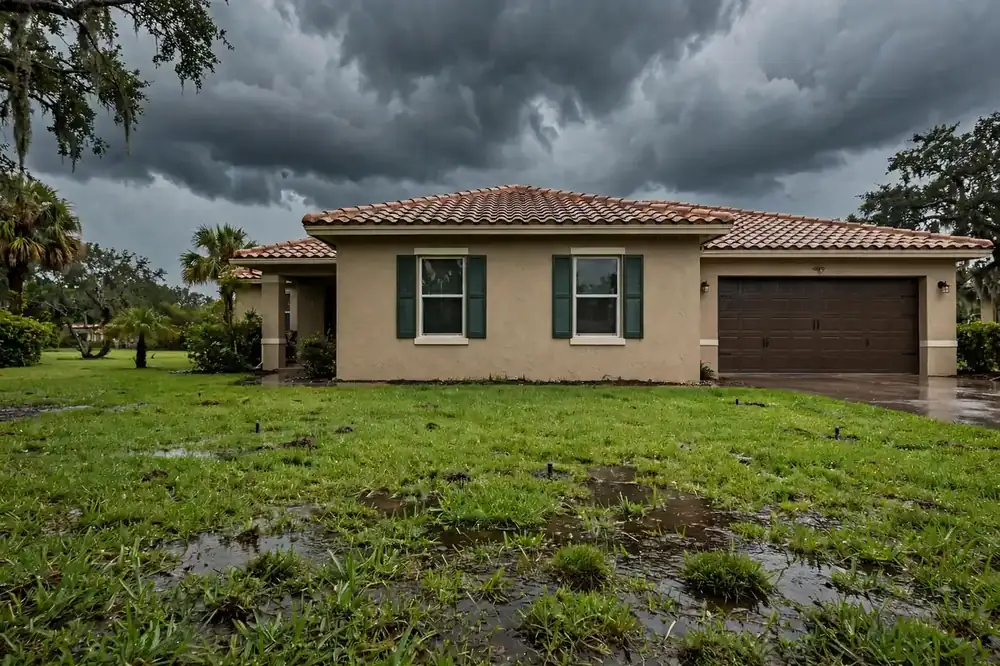
Often, yes. In Northeast Florida’s rainy season, roughly June to early October, frequent storms can water the lawn for you. Switch the controller to off or rain mode during wet stretches, keep the rain sensor set at 1/4 inch or less, and water only when the grass shows drought stress.
Key takeaways:
Northeast Florida’s rainy season starts around June 3 and ends around October 8 on average, according to Jacksonville averages reported by News4JAX, with September the wettest month and November the driest. Jacksonville averages about 50 inches of rain a year, much of it falling as afternoon thunderstorms that can drop half an inch in a single downpour.
That pattern is what makes the question worth asking. In winter, a missed irrigation cycle shows up fast on a St. Augustine lawn. In July, the lawn gets water from the sky several times a week, and a controller still running its dry-season program adds more on top.
Watering a lawn that rain has already soaked causes three problems at once. First, fungus: grass that stays wet day after day, especially overnight, is the perfect host for brown patch and other fungal diseases that thrive in warm, humid weather. Second, wasted water: every cycle you run on a wet lawn is water that runs off sandy soil or drains straight past the roots, and it shows up on the bill for nothing. Third, shallow roots: grass watered constantly, from above and below, has no reason to grow roots deep, so it wilts faster the moment a dry spell finally arrives.
None of this means sprinklers are the enemy in summer. It means the system should be a backup in the rainy season, not the main water source. UF/IFAS Flagler County Extension puts it plainly: during the rainy season it may be time to shut off irrigation completely, and you should not irrigate within 24 hours before or after a significant rain. The damage from too much water is covered in more detail in our over-irrigation guide, which explains how soggy soil starves roots of oxygen.
You have three ways to stop watering a wet lawn, and the right one depends on how much attention you want to give the controller.
| Option | How it works | Best for |
|---|---|---|
| Controller off or rain mode | You switch the controller off, or to its rain-delay setting, during wet stretches and switch it back on when the lawn needs water | Homeowners who watch the weather and do not mind a manual switch |
| Rain sensor only | The sensor interrupts the controller automatically after it collects enough rain, then lets it run again once it dries out | Most Palm Coast homes — cheap, simple, and already required by Florida law on automatic systems |
| Smart weather-based controller | The controller checks local weather and skips cycles itself, adjusting run times to the season | Homeowners who want the system to decide, and who already plan a controller upgrade |
Turning the controller off costs nothing and works immediately, but it only works if you remember to turn it back on. A rain sensor costs far less than a controller and needs no attention between storms, which is why it is the default recommendation for most homes. A smart controller does the most thinking for you, and it is the right upgrade if your controller is old, has no rain-delay setting, or you want seasonal adjustment handled automatically. Our smart irrigation controllers page compares the options in full.
A rain sensor is a small device, usually mounted on a fence post or gutter where rain falls on it freely, that tells the controller to pause when it has collected enough rain. Florida law requires a working rain or soil-moisture sensor on automatic systems installed after May 1, 1991, so most Palm Coast systems already have one — the question is whether it is set right and still working.
Set it to the smallest set point your device offers, 1/8 inch on most devices, and never above 1/4 inch, per the newer UF/IFAS AE221 guidance. An older UF/IFAS Flagler blog from 2018 suggested 1/2 to 3/4 inch, but that figure is outdated — at that setting the sensor lets the system water through rains that already soaked the lawn, so do not use it.
Test the sensor at least once a year, and always at the start of the rainy season. If it still fails after a disk change, our troubleshooting guide walks through sensor faults step by step.
The hardest part of switching the system off is knowing when to switch it back on. Do not water on a calendar date, and do not water just because a week has passed without a storm. Water when the grass tells you it is thirsty, and give rain a full day to do its job first: UF/IFAS advises not irrigating within 24 hours before or after a significant rain, and watering only when the grass shows drought stress.
Drought stress has three reliable signs on St. Augustine and other Florida lawns. First, leaf blades fold inward along their length, like a taco, instead of lying flat. Second, the lawn takes on a grayish-blue tint rather than its normal green. Third, footprints stay visible after you walk across the grass instead of springing back. Any one of these signs after a dry stretch means it is time to water; all three together mean the lawn is already past due. A simple check before you water: push a screwdriver into the soil. If it slides in easily to several inches, the soil is still moist and you can wait another day.
When the rainy season ends in early October, do not just flip the controller back to its summer program. Run every zone one at a time and watch each head: heads that sank, tilted, or clogged over the summer will show up as dry arcs or misting spray, and fixing them now beats discovering them in a dry November week. Reset run times to the fall season rather than leaving summer times in place, and confirm the controller’s schedule against the current rules on our Palm Coast Watering Days page before the first fall cycle runs.
While you are at the controller, check the rain sensor one more time — four months of summer storms can leave debris in its cup or wear its disks. If it fails the hose test, replace the disks or the unit before you rely on it again. For a full seasonal tune-up, our irrigation system maintenance page lists what a technician checks on a maintenance visit.
Before the first summer storms arrive, spend twenty minutes on storm prep that has nothing to do with the controller. Walk every zone and straighten heads that mowers or foot traffic knocked sideways, so spray lands on grass instead of driveways and walls. Clear debris from around valve boxes so a technician can reach a valve fast if a storm damages a line, and check that drainage around the boxes carries water away rather than pooling over them.
If your yard holds standing water after storms, that is a drainage problem, not an irrigation problem — our yard drainage page explains how grading and French drains fix the low spots that drown turf every summer. One paragraph of prep now saves a soggy-lawn call in July.
Switch the controller off or to rain mode in wet stretches, keep the rain sensor at 1/8 to 1/4 inch and tested, and water again only when the lawn shows folded blades, a grayish-blue tint, or footprints that stay visible. That is the whole rainy-season plan in one paragraph.
Leaving the summer program running unchanged is the most common mistake — the controller cannot see rain. Leaving a sensor bypassed after a repair is the second: the system looks automatic but has no rain shutoff at all. Avoid both and the rainy season mostly takes care of itself.
A rain sensor is hardware outside the house that measures actual rainfall and interrupts the controller when it collects enough. A rain delay is a controller setting that pauses watering for a set number of days after you press it. Use both together: the sensor as the automatic guard, and the delay when you know a wet stretch is coming.
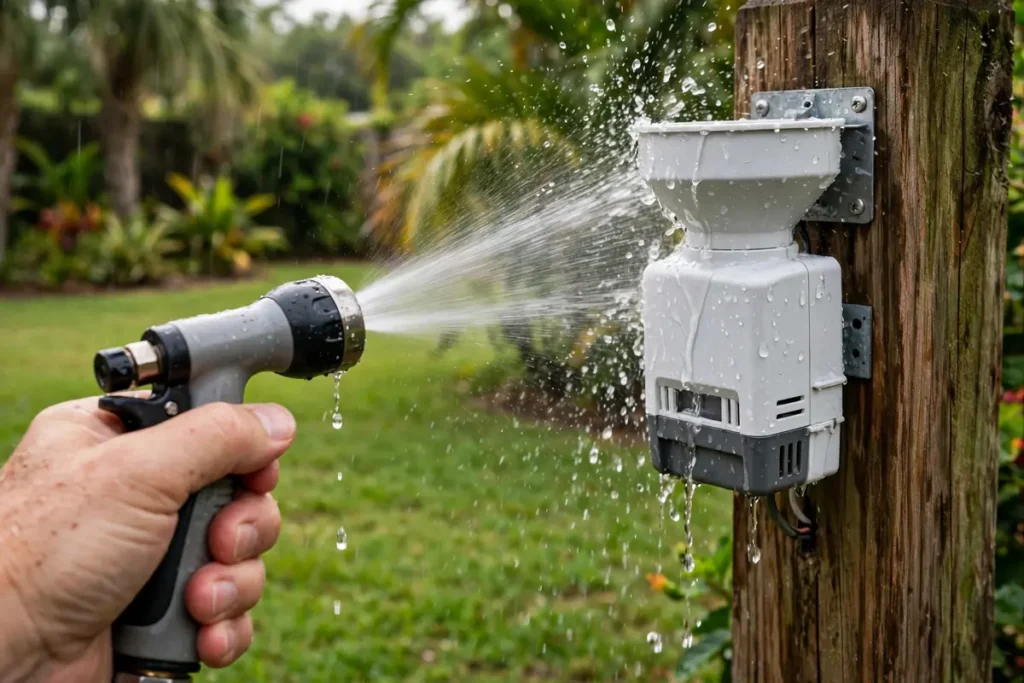
A rain sensor is hardware outside the house that measures actual rainfall and interrupts the controller when it collects enough. A rain delay is a controller setting that pauses watering for a set number of days after you press it. Use both together: the sensor as the automatic guard, and the delay when you know a wet stretch is coming.
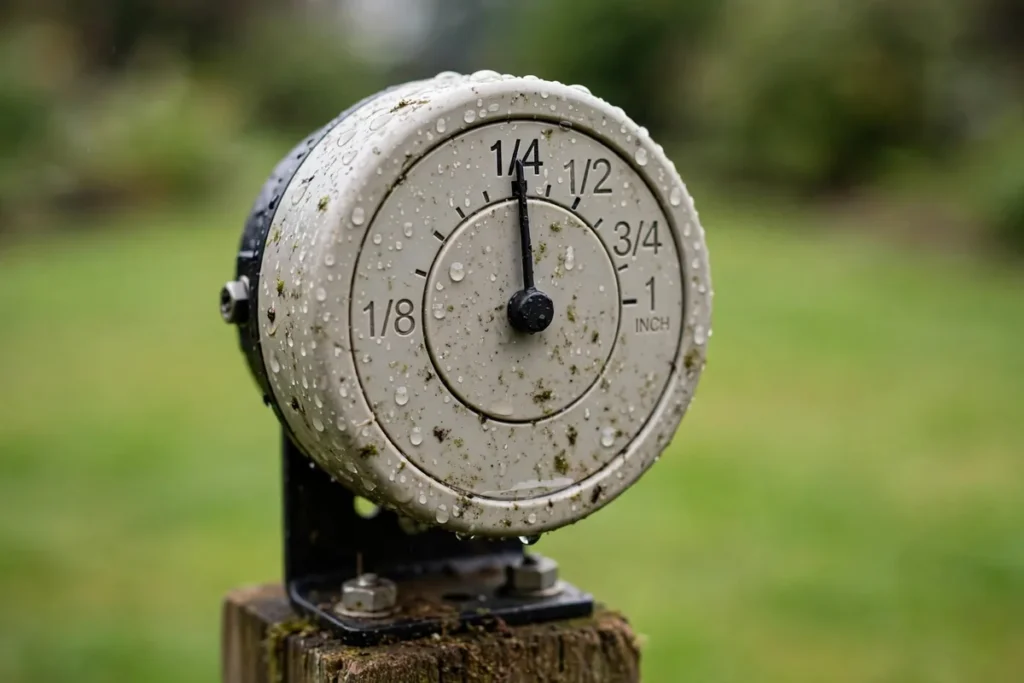
Set the rain sensor to 1/8 inch, never above 1/4 inch, and run the 30-second hose test. Replace worn disks. Straighten heads and clear valve boxes.
Switch the controller to off or rain mode, let the sensor do its job, and do not irrigate within 24 hours before or after a significant rain.
Test every zone, reset run times for fall, confirm the schedule on the Watering Days page, and re-test the rain sensor before the dry season.
Call a pro if the sensor fails the hose test after a disk change, if the controller will not hold a program, or if standing water keeps returning to the same low spot after storms.
If you are unsure whether your sensor works, a short visit settles it: we test it with a hose and set the controller for the season. Call (386) 237-2983.
A rain sensor that is set wrong or worn out is the same as no sensor at all. We test sensors, replace disks, and install smart controllers that skip cycles on their own when it rains.
See our smart irrigation controllers page or call (386) 237-2983. Irrigation & Sprinkler by DreamScapes has served Palm Coast since 2015, with 930+ customers, from 15 Hargrove Ln, Unit 5D, Palm Coast, FL 32137. We respond within 24–48 hours.
Usually no. Wait at least 24 hours after a significant rain, then check the lawn for drought stress — folded blades, a grayish-blue tint, or footprints that stay visible. If the soil is still moist a few inches down, wait another day.
At least 24 hours after a significant rain, per UF/IFAS Flagler County Extension guidance. A light shower that barely wets the surface does not count as a significant rain; a storm that soaks the soil does.
The smallest set point your device offers, 1/8 inch on most devices, and never above 1/4 inch. That is the newer UF/IFAS AE221 guidance; an older 2018 blog figure of 1/2 to 3/4 inch is outdated and lets the system water through real rain.
In Northeast Florida, around October 8 on average, with the season running roughly June to early October and September as the wettest month. After it ends, test every zone and reset run times before the system runs its fall program.
Yes. The rules still govern whenever you do water, even in a wet summer. This post does not restate the days or hours — check the current schedule on our Palm Coast Watering Days page, which is the site’s single source for watering rules.
For most homes, a working rain sensor is enough — it is cheaper, simpler, and already required by law on automatic systems. A smart controller is better if you want weather-based skipping and seasonal adjustment handled automatically, or if your controller is old and lacks a rain-delay setting. See our smart irrigation controllers page for the comparison.