⭐⭐⭐⭐⭐930+ Happy Customer Reviews

Sprinkler vs. Drip Irrigation: Which One Does Your Yard Actually Need?

Most Florida yards don’t need to choose between a sprinkler system and drip irrigation — they need both, running on separate zones. Sprinklers spray water through the air to cover open turf, while drip irrigation releases it slowly at the base of a plant’s roots. Knowing when each one applies, and where they overlap, is the difference between a design that keeps your lawn and beds healthy year-round and one that overwaters half the yard while starving the other half.

What Is Sprinkler Irrigation?

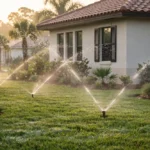
Sprinkler irrigation applies water through pop-up spray heads or rotors connected to buried pipe, mimicking rainfall over an open area. A controller opens the zone’s valve on schedule, water moves through the mainline, and heads pop up to spray a fixed pattern before retracting when the cycle ends. Because water travels through the air before reaching the ground, sprinkler zones lose more to evaporation and wind drift than ground-level delivery methods, and coverage depends on head spacing and pressure being set correctly during installation.

Best Uses for Sprinkler Systems

Sprinkler zones are built for open turf — St. Augustine, Bermuda, and Zoysia lawns all need even, broad coverage that only spray or rotor heads deliver efficiently. They also work well for large open beds where uniform coverage matters more than precision, such as a wide strip of ornamental grasses. Anywhere water needs to reach a wide, flat area quickly, sprinkler heads are still the right tool.

What Is Drip Irrigation?

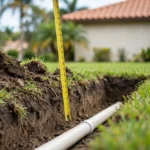
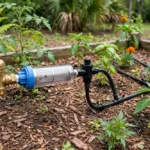
Drip irrigation delivers water through emitters placed along a low-pressure line, releasing it in slow, steady drops directly at a plant’s root zone instead of spraying it through the air. Because water goes straight to the soil around the roots, very little is lost to evaporation, wind, or runoff onto walkways and driveways. Drip zones typically run at much lower flow rates than spray zones, which means longer run times but far less total water use for the same planting bed.

Best Uses for Drip Irrigation

Drip and micro-spray fit shrub beds, foundation plantings, hedges, and vegetable gardens — anywhere plants are spaced individually rather than growing as a continuous turf surface. It’s also the better option for potted plants and raised beds, where a spray head would waste most of its water on bare ground between containers. If a bed is watered by hand right now, it’s usually a strong candidate for a drip zone.

Sprinkler vs. Drip Irrigation: Key Differences

Both methods draw from the same mainline, but they behave very differently once water leaves the pipe. Here’s how they compare side by side.

 Sprinkler IrrigationDrip Irrigation
Best forTurf grass, open lawn areasShrub beds, gardens, foundation plantings
Water deliverySprayed through the airReleased at the root zone
Water efficiencyLower — evaporation and wind driftHigher — minimal evaporation loss
Coverage areaWide, uniform areasIndividual plants or rows
Typical install costLower per sq. ft. on open turfHigher per zone due to emitter spacing
MaintenanceHead alignment, nozzle clogsEmitter clogs, line punctures

Sprinkler System Pros

  • Covers wide, open turf areas quickly and evenly
  • Lower cost per square foot to install on flat lawn areas
  • Easy to automate with standard controllers and rain sensors
  • Works well with most existing irrigation designs already in the ground

Sprinkler System Cons

  • Loses more water to evaporation and wind drift than ground-level delivery
  • Overspray onto driveways, sidewalks, and streets wastes water and can violate local ordinances
  • Uneven coverage in shaded or irregularly shaped beds
  • Uses more total water than drip for the same planting area

Drip Irrigation Pros

  • Delivers water directly to the root zone with minimal waste
  • Reduces weed growth by keeping open soil between plants dry
  • Lowers water bills compared to spraying the same area
  • Keeps foliage dry, which helps prevent certain fungal diseases

Drip Irrigation Cons

  • Emitters can clog with sediment or mineral buildup over time
  • Not practical for watering turf grass or large open lawn areas
  • Requires more upfront planning to place emitters at each plant
  • Buried or surface lines can be damaged by digging or foot traffic

Does Drip Irrigation Get You Around Florida Watering Restrictions?

In Flagler and St. Johns County, yes — with an important distinction. Under the St. Johns River Water Management District’s (SJRWMD) current Phase III order, irrigation using micro-spray, micro-jet, drip, or bubbler systems is allowed any day, at any time. That exemption doesn’t apply to spray or rotor zones watering turf, which stay limited to the district’s single allowed watering day per week.


In practice, a shrub bed or garden on a drip zone can run on a normal schedule throughout the week, even while the lawn next to it is restricted to one day. For established plantings that’s a convenience. For newly installed beds that need more frequent watering to root in, it can be the difference between a landscape that survives its first month and one that doesn’t.


Volusia County runs its own separate watering ordinance rather than the SJRWMD schedule, and its published rules don’t list this same drip exemption. If your property is in Volusia, don’t assume the SJRWMD rule applies — check with the county directly, or ask us to confirm before you plan a watering schedule around it.

Why Most Florida Yards Need Both Systems

A yard rarely needs only one delivery method, because a lawn and a planting bed use water at different rates and for different reasons. The standard setup runs both off the same controller — turf areas on spray or rotor zones, beds and hedges on drip or micro-spray zones — so each area gets exactly the schedule it needs instead of a compromise that overwaters one and underwaters the other.


Mixing spray and drip on the same zone is the mistake to avoid. The two release water at very different rates, so a shared zone usually means the lawn finishes before the bed has had enough, or the bed floods long before the lawn catches up. Separate valves, even off one controller, keep both running the schedule they’re actually designed for.


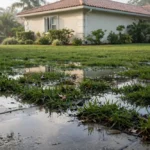
A few signs point to a zoning problem worth fixing: shrubs that stay stressed even though the lawn around them looks healthy, a bed that’s soaked on the surface but dry a few inches down, or a lawn zone that finishes early because a handful of drip emitters were tied into it along the way. Any of these usually means it’s time to split that zone rather than adjust the run time.

Talk to an Irrigation & Sprinkler by Dreamscapes Specialist

Irrigation is all we do — no mowing, no pest control, no landscape crews splitting attention across other jobs. That focus is why we can walk a property, tell you honestly which zones should run spray and which should run drip, and handle the installation without guesswork.


If your yard already has a system overwatering some areas and missing others, our repair team can assess what’s there, and a full system design lays out new zones correctly from the start. Our maintenance plans keep everything running the way it was designed once it’s in the ground.

Frequently Asked Questions

Can I convert part of my sprinkler system to drip irrigation?

Yes. A technician can cap the existing spray heads on a zone and convert it to drip or micro-spray, as long as the zone’s valve and pipe size can handle the new flow rate. Beds currently on a lawn zone are the most common candidates for this kind of conversion.

Is drip irrigation exempt from Florida watering restrictions?

In Flagler and St. Johns County, yes — SJRWMD’s current order allows drip, micro-spray, and bubbler zones to run any day, any time. Volusia County follows a separate ordinance that doesn’t list the same exemption, so check with the county directly if your property is in Volusia.

Which costs less to install — sprinklers or drip irrigation?

For open turf, sprinkler heads are usually cheaper per square foot to install. For garden beds and individual plants, drip is often more cost-effective long-term because it uses less water and creates fewer overwatering problems, even though the upfront emitter layout takes more planning.

Can sprinklers and drip irrigation run on the same controller?

Yes, as long as each type runs on its own zone with its own valve. One controller can manage lawn zones on spray heads and bed zones on drip at the same time — they just can’t share a single valve, since they release water at different rates.

How do I know if my yard needs drip irrigation?

If any bed, hedge, or row of shrubs is currently hand-watered or sitting on the same zone as your lawn, it’s a strong candidate. Watch for dry spots between plants, healthy grass but stressed shrubs on the same zone, or beds that stay wet on the surface but dry a few inches down.
Facebook
X
WhatsApp