Call (386) 237-2983 to talk to a real person on our team — not a call center.
Book a sprinkler head repair online in under a minute. Click hereto pick a time.
Most head repairs scheduled within 24–48 hours — not weeks.
Sprinkler Head Repair, Adjustment and Replacement
The part that fails most often is the part you can actually see.
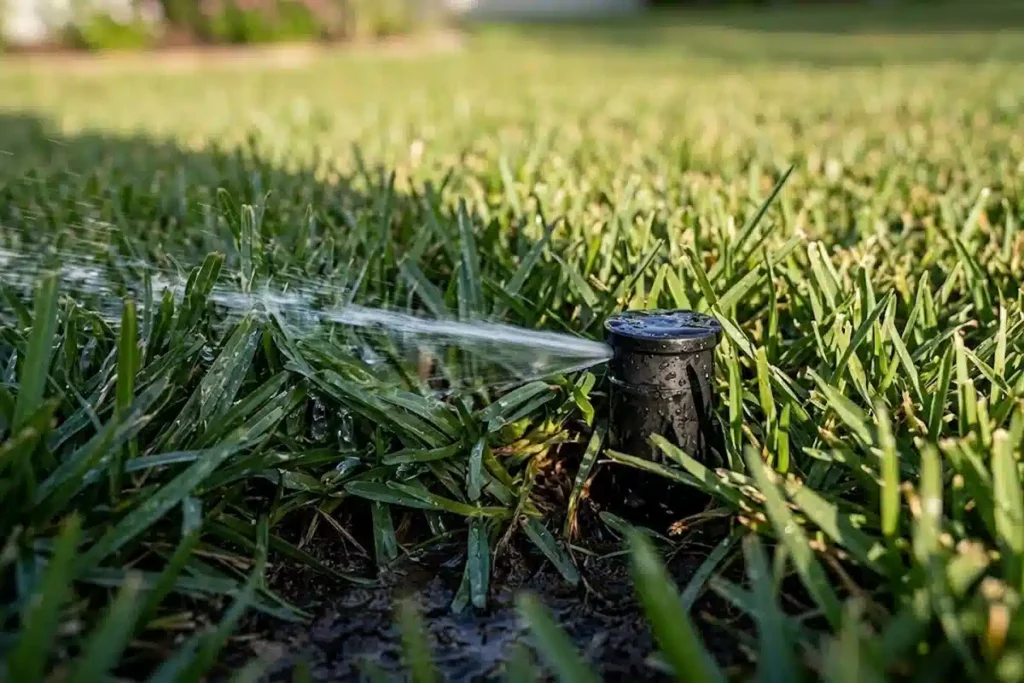
Heads take the abuse. Mowers clip the risers, cars roll over them on the verge, and sand works its way into the nozzle until the spray thins out. Some sink into soft ground and water the soil around them. Others get knocked off their arc and soak the sidewalk instead of the lawn.
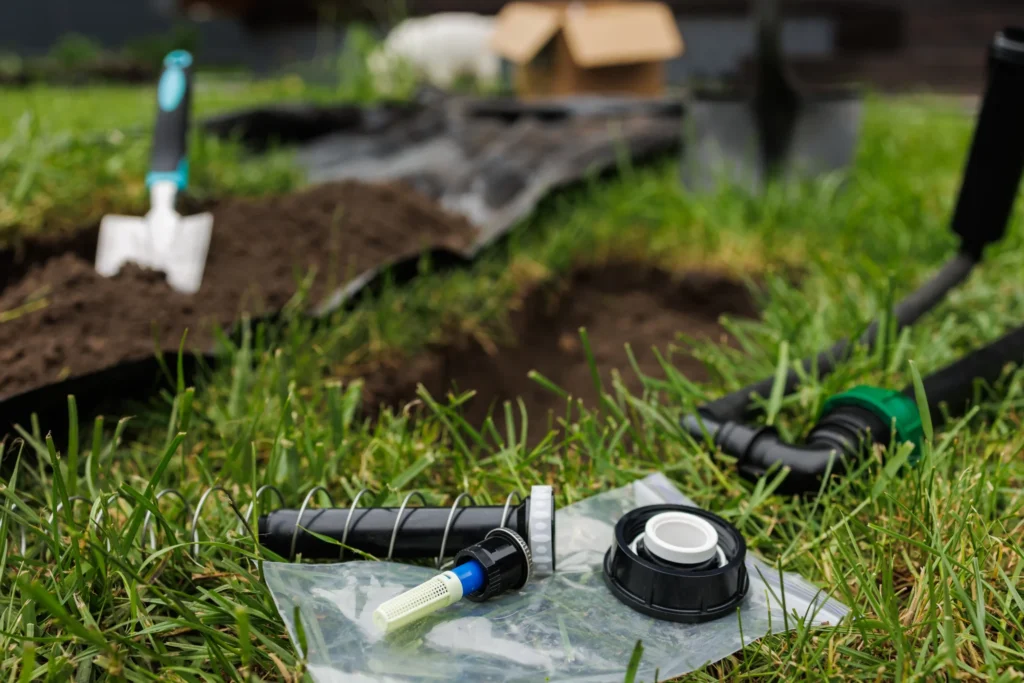
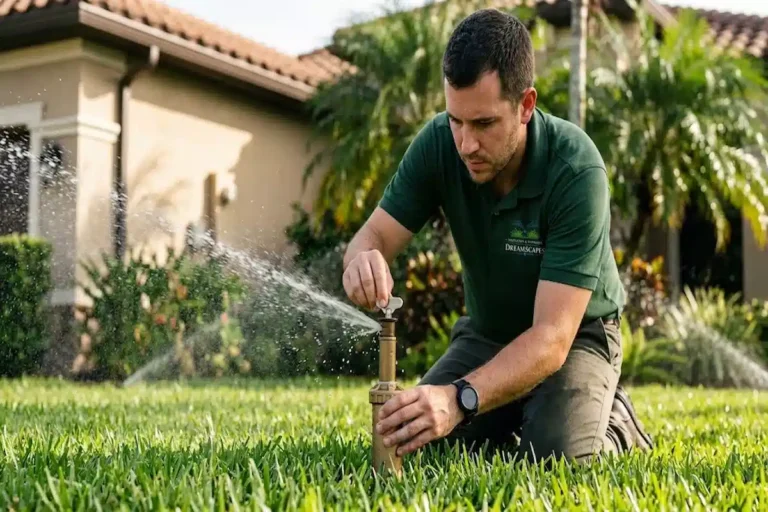
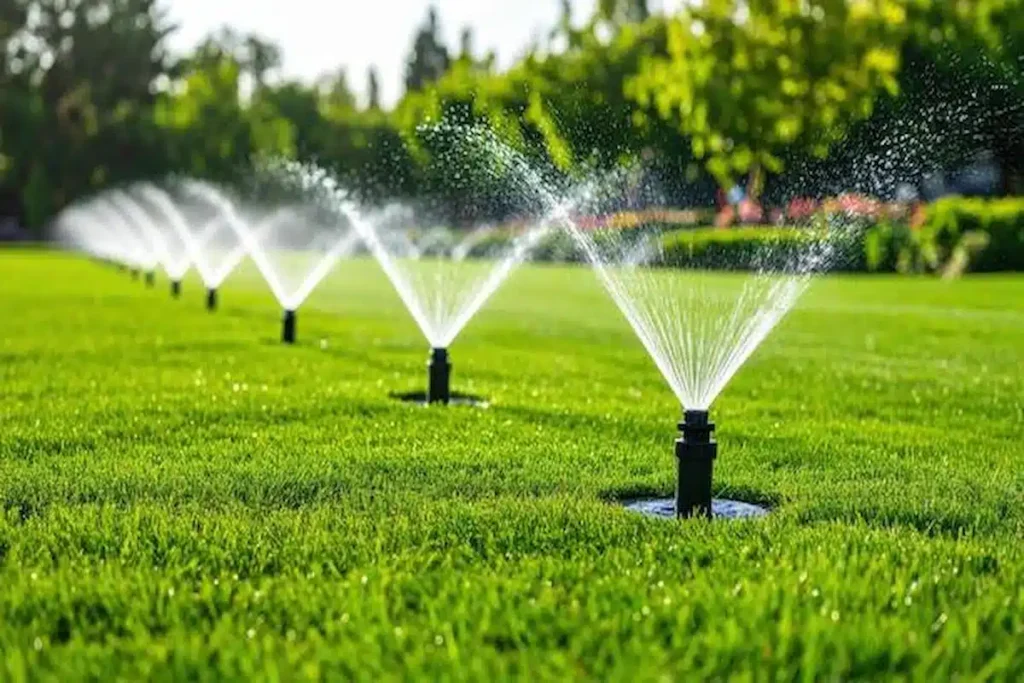
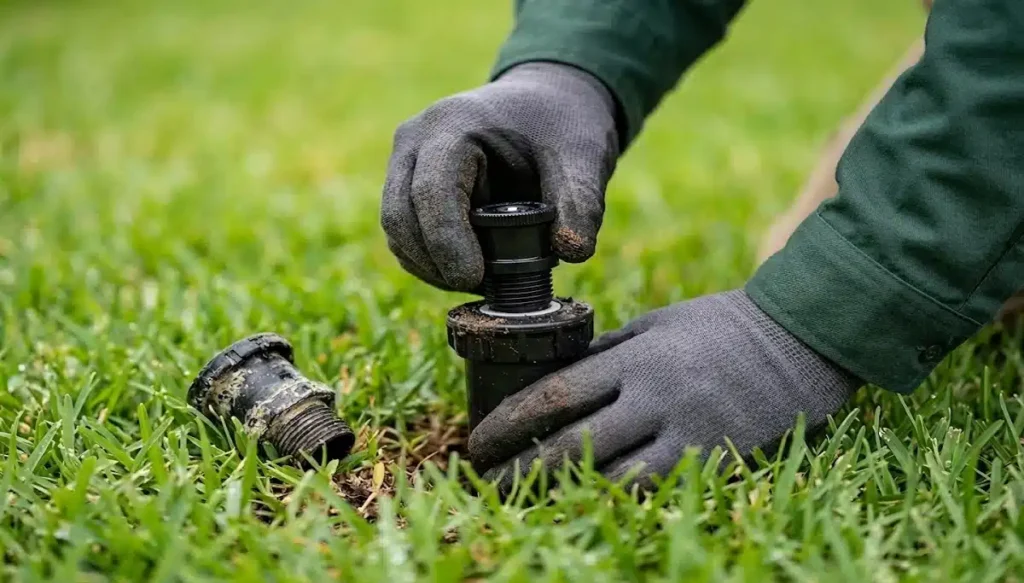
We run the zone, watch every head through a full cycle, and deal with what we find. Nozzles get cleared or swapped, sunken heads get raised, arcs get reset, and anything cracked gets replaced with a matching part. Head work is also a standard part of every irrigation system maintenance visit we carry out.
A single broken head can waste more water in one cycle than the rest of the zone uses all month. On a one-day-a-week schedule, it also means that patch of lawn goes another seven days with nothing.
Why Sprinkler Heads Fail Faster Here
Florida sand is hard on nozzles and the sun turns exposed plastic brittle within a few seasons. St. Augustine grows thick enough to block a low head, and soft ground lets risers settle. We have been replacing heads across Palm Coast since 2015, so we know which ones give out first and what to fit instead. Systems we install from scratch get pressure-regulated heads for the same reason.
A head that mists instead of spraying is not worn out. It is running above its rated pressure, and the fine droplets blow away before they land. A head that barely reaches the edge of its arc has the opposite problem. Swapping the part fixes nothing if the pressure behind it is wrong, so we take a reading at the zone before we fit anything. Pressure is one of the first things we settle during irrigation system design too.
Soft ground and repeated mowing push heads below grade. Once the spray is firing into grass instead of over it, that section of lawn stops getting water. We dig the head out, reset it flush and level, and pack the soil back properly so it stays put.
Blocked and Worn Nozzles
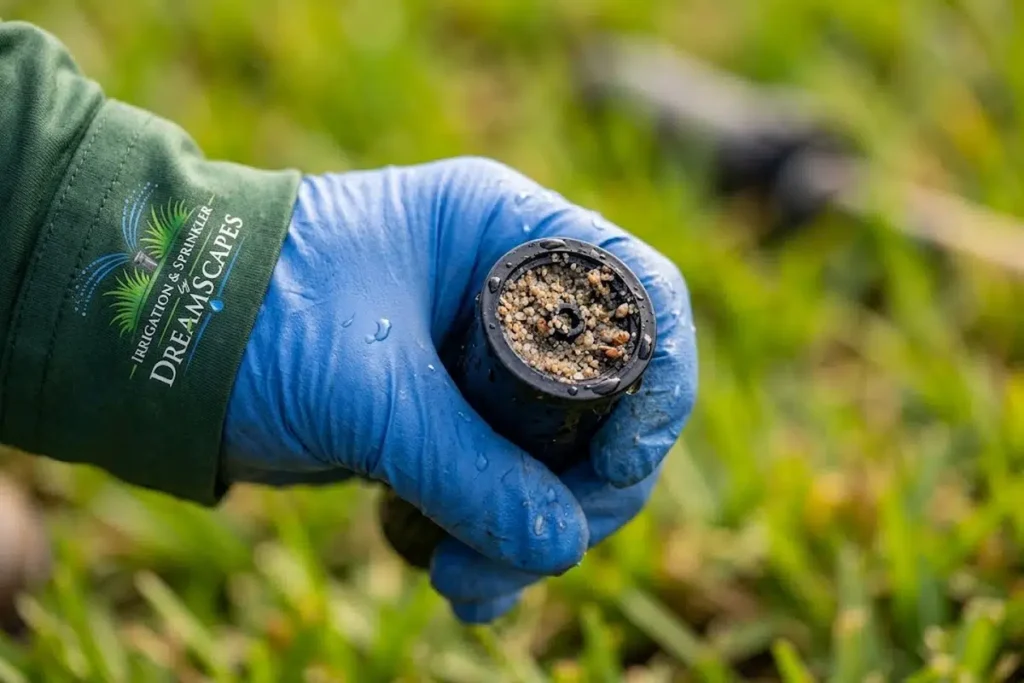
Sand and grit collect in the nozzle until the pattern breaks up and the throw shortens. Some clean out. Others have worn past the point of holding a pattern and need replacing. We match the new nozzle to the arc and radius the zone was built around, not whatever happens to be on the van.
Cracked Risers and Broken Seals
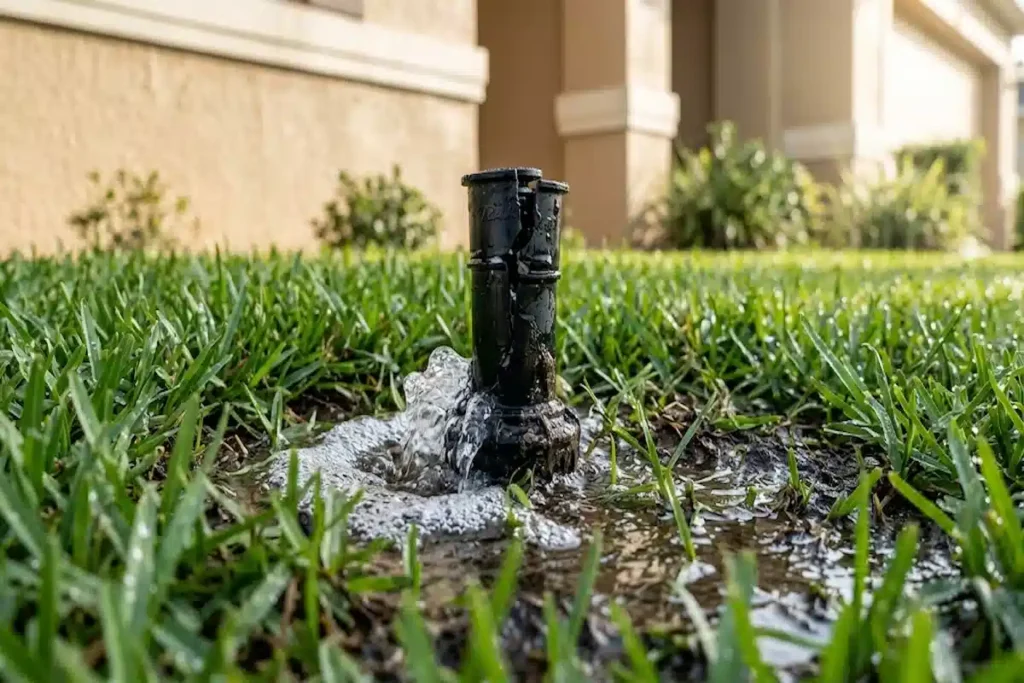
A head that weeps between cycles or floods the grass around it usually has a split riser or a failed wiper seal. Both are cheap parts that waste a surprising amount of water. We replace the head rather than patching it, because a repaired seal rarely lasts a season in this heat.
Great company. I used them to redo the landscaping for my entire front yard. They were fast, clean, and professional. They were even very understanding when we requested some minor changes mid-project. Don’t hesitate using Dreamscapes.
maurizio b
2 years ago
Kara Dixon
2 years ago
We are so pleased With Harry
And his crew! We are
Building a home
And another landscaper
Was supposed to arrange for
Our sod to be laid. Never
Heard from them and delay,
Delay, delay. My
Husband happened to see Harry from Dreamscapes working on the landscaping at another house and spoke
To him. He
Performed miracles and was able
To
Get
Us sod
In under a week! Truly amazing! He cares about
His work and his customers. He even helped
My
Husband with our irrigation system to make
Sure it was installed properly. It is VERY hard to find hard workers these
Days! Thrilled to have
Found Harry
At
Dreamscapes,
HIGHLY recommend. In fact if we need ANY landscaping or
Irrigation assistance we will
Call him in a second. He is trustworthy, hardworking and runs a superior business. We
Thank you
For
Making things
Happen for
Us and really
Appreciate you!!!
Why Homeowners Call Us for Head Repairs
Irrigation is the only thing we do. No mowing, no landscaping, no side jobs. A head repair is the job we came for, not five minutes squeezed in at the end of a mowing route.
Since 2015 we have serviced systems across Palm Coast, Flagler Beach and Bunnell — 930+ properties, rated 4.5★ by the people who live here. We handle commercial properties as well.
How much does it cost to replace a sprinkler head?
Most single head replacements run $15 to $45 for a spray head and $35 to $85 for a rotor, plus the service call. We quote the full job before fitting anything.
Why is my sprinkler head not popping up?
Usually a blocked riser, a worn spring, or grass grown tight around the collar. Sometimes the zone itself is not getting water, which points to the valve rather than the head.
Why is my sprinkler head spraying mist instead of water?
Pressure is too high for that head. The spray breaks into fine droplets that drift away before landing. Fitting a pressure-regulated head fixes it properly.
Can I replace a sprinkler head myself?
You can swap a like-for-like head if you know the arc and radius. Getting the wrong nozzle throws the whole zone out, so check the existing part before buying anything.
How long do sprinkler heads last?
Eight to twelve years in Florida sand. Nozzles wear sooner. Heads on verges and driveway edges fail faster because of mowers and vehicles.
Do you repair all sprinkler head brands?
Yes. We carry rotors, spray heads, and nozzles for the common makes, and match replacements to what is already fitted so the zone keeps its original coverage.